US Apache Helicopter Downed Near Strait of Hormuz: How One Crash Sparked a US-Iran Military Exchange
US Army Apache helicopter crash near Strait of Hormuz is the event that set off one of the most significant direct US-Iran military exchanges in recent memory. A helicopter went down. A crew was pulled from the water. And within hours, missiles were flying in two directions across the Middle East.
This is what happened, why it matters, and what it actually means for the world.
What Happened: The Apache Goes Down Near Oman
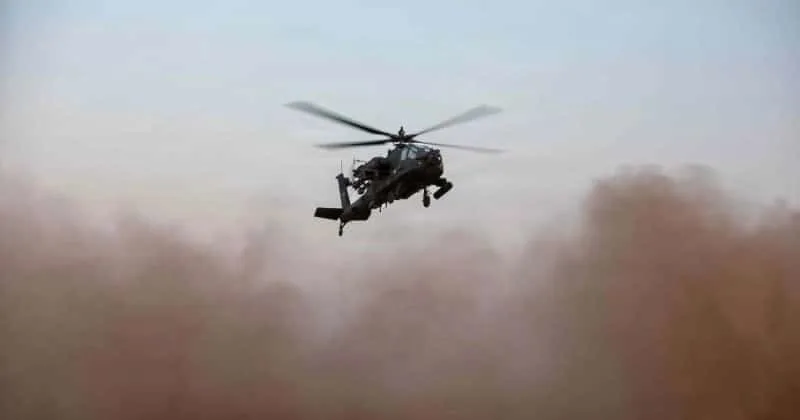
A US Army AH-64 Apache attack helicopter crashed into the waters near the Strait of Hormuz, off the coast of Oman. The exact circumstances around the downing became the center of everything that followed.
President Donald Trump was quick to point the finger. He publicly stated that Iran shot down the helicopter, calling it an attack on the US military. Tehran denied it initially, though Iranian officials later issued warnings that no attack would go unanswered. The language from both sides became harder, faster than most expected.
The good news, and it is genuinely good news, is that the crew survived. A sea drone rescued the US Army helicopter crew from the water near the Strait of Hormuz, according to multiple major outlets including the BBC. Trump confirmed the crew was safe. That part, at least, did not become a tragedy.
Why the Strait of Hormuz Makes This So Significant
The Strait of Hormuz is not just any stretch of water. It is the narrow channel between Iran and Oman through which roughly 20 percent of the world's oil supply passes every single day. Any military incident here sends shockwaves, not just politically, but through global energy markets.
Oil prices moved immediately after the news broke. Traders were described as being on edge, with prices fluctuating as the situation developed. This is what military incidents in this region do. They do not stay local.
The US Military Response: Strikes on Iran
The US did not wait long.
US Central Command (CENTCOM) announced retaliatory strikes against Iran. Multiple outlets, including CNN, the Guardian, and DW, confirmed that the US military launched strikes in response to the Apache helicopter downing. CENTCOM later confirmed the strikes were completed.
The targets were described as military in nature, though Iran pushed back hard. Iranian officials claimed US strikes hit two reservoirs and left a coastal town without drinking water. They also claimed to have struck 21 US bases across the region, and Jordan reportedly shot down five incoming missiles from Tehran.
This is the part of the story that escalated fast. What began as one downed helicopter became a full exchange of airstrikes between the United States and Iran. The Iranian foreign ministry warned that no attack would be left unanswered, and Iranian-aligned forces struck the US Navy's 5th Fleet in apparent retaliation.
Read More: I Am a Cockroach": How India's Gen Z Protest Movement Stormed Delhi Over Exam Irregularities
What Is the Sea Drone That Saved the Crew?
This detail got less attention than it deserved. The Apache crew did not survive because someone jumped in after them. They were rescued by an autonomous sea drone, a remotely operated naval vessel that located and pulled the crew from the water.
Reuters specifically asked the question that many readers were thinking: what actually is this technology? These unmanned surface vehicles are increasingly part of US naval operations in high-risk zones. They operate without putting additional personnel at risk. In a situation like this, where the area was clearly contested, that matters a great deal.
Where Diplomacy Stands
The timing is what makes this particularly complicated. Iran and the US were, reportedly, still in the middle of nuclear deal negotiations when the helicopter went down. Trump himself acknowledged the talks were continuing even as he vowed a military response.
That dual track, talking and striking simultaneously, is something that has a kind of familiar tension to it in modern US foreign policy. Whether those talks survive this exchange is the question no one can answer right now.
Disclaimer: This article is based on information available across the web. Parchar Manch does not take responsibility for its complete accuracy, as the content could not be fully verified.
FAQs
What is the AH-64 Apache helicopter?
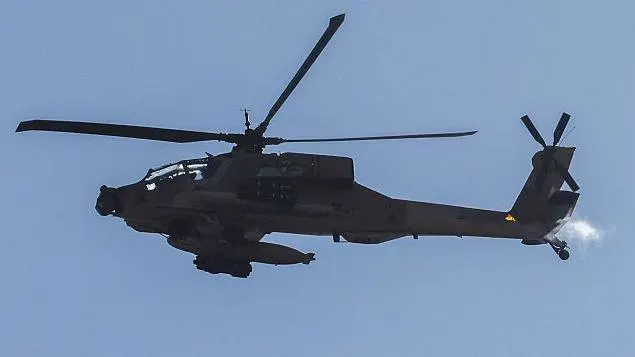
It is a twin-engine attack helicopter used by the US Army, equipped for combat and reconnaissance. It is one of the most advanced military helicopters in the world.
Did the Apache crew survive the crash near Hormuz?
Yes. All crew members were rescued from the water by a sea drone and confirmed safe by President Trump.
Did Iran officially claim responsibility for downing the helicopter?
Iran denied it initially. Trump blamed Iran directly, and the US launched retaliatory strikes based on that assessment.
How did the US respond militarily?
US CENTCOM launched retaliatory airstrikes against Iranian targets, which were declared completed. Iran responded with its own strikes on US military bases in the region.
Why does this matter beyond the Middle East?
The Strait of Hormuz is a critical chokepoint for global oil supply. Military escalation here affects energy prices, shipping routes, and international security arrangements worldwide.
Are US-Iran nuclear talks still happening?
As of the latest reporting, talks were continuing even as strikes were exchanged, though the future of those negotiations remains deeply uncertain.