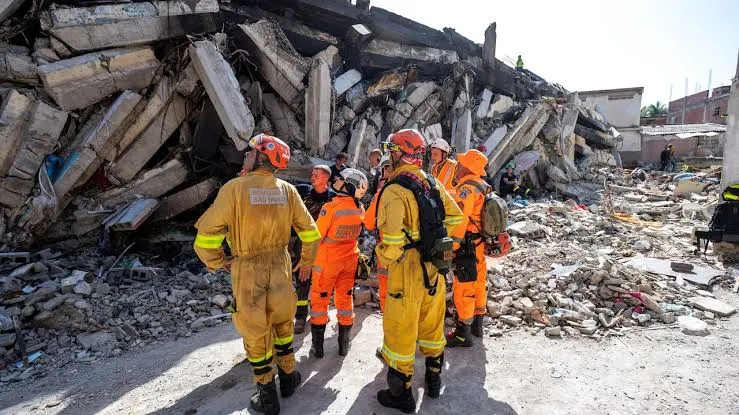
Venezuela Earthquake Survivors Found Alive Days Later: Inside The Race Against The Clock
A three year old boy pulled out of rubble after six full days. Sit with that for a second. That's the kind of detail that makes the Venezuela earthquake survivors story feel less like a headline and more like something you can't stop thinking about.
Why This Story Matters More Than The Numbers Suggest
It's easy to scroll past disaster headlines. Everyone does it. But this one keeps producing moments that punch through the noise, a mother and her nine month old pulled out together, a teenager rescued alongside her dog, a 60 year old woman found after 86 hours underground. These aren't just statistics. They're proof of how long a human body can survive against impossible odds, and why rescue timing matters so much.
What Actually Happened In Venezuela
On June 24, 2026, two massive earthquakes struck northwestern and central Venezuela within 39 seconds of each other. The first, a magnitude 7.2 foreshock, was followed by a 7.5 mainshock, centered in Veroes, a municipality in Yaracuy. The damage spread wide, hitting La Guaira, Caracas, Carabobo, Miranda, and Aragua especially hard. This was the strongest earthquake Venezuela has felt since 1900.
By the numbers, it's staggering. Nearly 1,950 people killed, over 10,500 injured, and more than 43,200 reported missing at various points during the search. Around 8.6 million people were exposed to moderate or severe shaking. That's not a regional disaster. That's a national one.
Read More: Japanese Yen Falls to Weakest Level Against Dollar Since 1986, Here's What That Actually Means
How Rescue Teams Actually Work Against Time
There's a term rescuers use called the golden window, the first 48 to 72 hours after a disaster when survival chances without water are highest. After that, hope narrows fast, but it doesn't disappear. Here's roughly how the search unfolded.
- International teams began flooding in almost immediately, eventually reaching over 2,000 rescuers from 27 countries, coordinated with UN support.
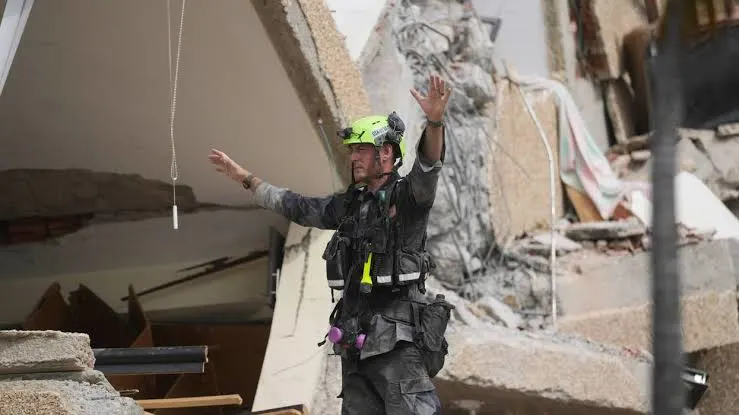
- Search dogs and specialized listening equipment were used to detect tapping sounds or faint breathing beneath collapsed buildings, since near total silence is required to hear anyone trapped.
- Once a survivor's location was confirmed, teams often had to break through multiple walls or use controlled concrete breaking equipment, sometimes taking upwards of 11 hours of continuous digging for a single rescue.
- Where possible, rescuers slid water or straws through small gaps in the rubble to keep survivors alive while extraction continued.
Real Rescues That Show What This Actually Looked Like
Some of these stories are hard to forget. A woman named Belkys Josefina Barreto García was pulled out alive after 86 hours trapped in Caraballeda, following 11 hours of nonstop digging by a Salvadoran team. A 15 year old girl and her dog were freed in Catia La Mar after rescuers broke through several walls to reach them. And well past the golden window, a mother and her infant son were rescued together after being trapped for over 30 hours, the child kept alive by water passed through a pipe with a straw.
Read More: HDFC Bank Appoints Rajiv Kumar as Part-Time Chairman, Ending a Months-Long Governance Search
Mistakes And Frustrations That Slowed Things Down
Locals have been openly frustrated, and honestly, it's hard to blame them. Reports described a lack of heavy machinery, constant aftershocks disrupting digging, and in some troubling cases, officials reportedly stopping to take photos at rubble sites rather than helping. Meanwhile, Venezuela's already strained healthcare system, worn down by years of underfunding, struggled to treat the thousands of injured arriving at hospitals.
Pro Tips For Understanding Earthquake Rescue Coverage
If you're following disaster news like this, watch the language closely. Terms like golden window and USAR teams (urban search and rescue) tell you exactly where an operation stands. When coverage shifts from rescue to recovery, that's usually the moment hope for survivors quietly fades, even if it's never stated directly.
A Quiet Closing Thought
What stays with you isn't the death toll, oddly enough. It's Hernán Sandoval, digging for two straight days looking for his own family, saying faith is the last thing you lose. That line says more about disaster than any statistic ever could.
Read More: Mountain Lions in California Preserve: How One Predator Quietly Rewired an Entire Ecosystem
Disclaimer: This article is based on information available across the web. Parchar Manch does not take responsibility for its complete accuracy, as the content could not be fully verified.
FAQs
How many people died in the Venezuela earthquakes?
Reports put the death toll at nearly 1,950 people, with over 10,500 injured.
How long after the earthquake were survivors still being found?
Survivors were still being pulled from rubble six days after the quakes, well beyond the typical 72 hour golden window.
Which countries sent help to Venezuela?
More than 2,000 rescuers from 27 countries, including the US, Spain, El Salvador, Mexico, and several Latin American nations, joined the search effort.
What is the golden window in earthquake rescues?
It refers to the first 48 to 72 hours after a disaster, when survival chances without water are considered highest.
Where in Venezuela was hit hardest?
La Guaira and Caracas suffered the most severe damage, though Carabobo, Miranda, Yaracuy, and Aragua were also badly affected.