Nine Dead in Delhi's Vivek Vihar Fire: What Every Tenant and Fire Victim Must Know About Their Legal Rights
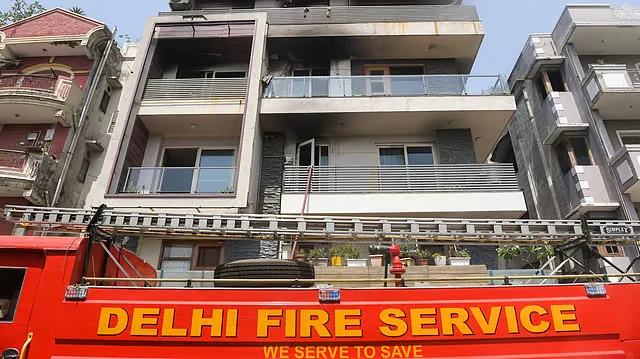
At 3:48 in the morning, a PCR call reached Vivek Vihar Police Station in Delhi's Shahdara district. By the time 14 fire tenders arrived and the blaze was doused, nine people were dead. They were residents of an ordinary four-storey building , sleeping, as most people are at that hour, with no reason to expect what was coming.
The tragedy unfolded in the early hours of Sunday when a fire broke out in a four-storey residential building in Vivek Vihar, claiming nine lives. Prime Minister Modi announced Rs 2 lakh ex gratia from PMNRF for the families of the deceased and Rs 50,000 for the injured. Condolences arrived from across the political spectrum.
And then, as always happens, the investigation began. And what it found matters deeply , not just for the families who lost someone in Vivek Vihar, but for millions of Indians living in similar buildings across the country.
The Municipal Corporation of Delhi launched an investigation into alleged building bylaw violations, with a senior official confirming that grills covering the entire rear side of the building had severely hampered rescue operations and defeated the purpose of open balconies mandated under the Unified Building Bylaws 2016.
This is not just a fire story. It is a legal story. And the legal questions it raises touch almost every renter, flat owner, and residential building occupant in urban India.
Why This Fire Was Not Simply an Accident , And Why That Changes Everything Legally
There is a reflexive tendency, after disasters like this, to call them "tragic accidents" and move on. Sometimes they are. But when investigators find that grills blocked the only escape routes, that building bylaws were violated, that rescue operations were "severely hampered" by structural choices made by the building owner, the word "accident" becomes legally complicated.
The building plan was sanctioned on September 26, 2013, but preliminary probes found discrepancies in compliance with building bylaws, including grills that blocked rear balconies, which are required to remain open under the Unified Building Bylaws 2016.
Under Indian law , specifically under tort law and the principle of negligence , a property owner has a duty of care to every occupant of their building. When that duty is breached, and when that breach directly causes injury or death, the owner can be held legally liable. This is not a moral argument. It is a legal one, with quantifiable consequences.
The ex gratia payment from PMNRF is a gesture of state sympathy. It is not compensation for legal liability. The two are entirely different things , and families who accept the government payment without understanding this may be unknowingly forfeiting their right to pursue far larger claims against the building owner, the builder, or the MCD officials who approved a non-compliant structure.
A legal advisor near you is the only person positioned to tell a grieving family the difference between the two, before it is too late.
What Indian Law Actually Provides for Fire Victims , Explained Plainly
This is the part most people do not know, and most coverage does not explain.
Negligence and Premises Liability: Indian civil law , rooted in the Law of Torts , holds property owners responsible for maintaining safe premises. When a building owner installs grills that block fire escape routes, or when a landlord ignores electrical faults, and a fire results from that negligence, the victim has a civil claim for compensation. This compensation goes far beyond any ex gratia payment. It covers medical expenses, loss of income, property destroyed in the fire, pain and suffering, and, in cases of death, wrongful death claims by surviving family members.
Building Code Violations as Evidence of Negligence: The MCD confirmed that grills covering the whole rear side of the building had hampered rescue operations and defeated the aim of open balconies mandated under the Unified Building Bylaws 2016. In a civil suit, a confirmed building bylaw violation is powerful evidence of negligence. It shifts the burden significantly. The owner cannot easily argue that they were not at fault when the MCD itself has documented the violations.
Criminal Liability: Beyond civil compensation, building owners who wilfully or recklessly violate safety norms, causing death, can face criminal charges under the Bharatiya Nyaya Sanhita (BNS), which replaced the IPC in 2024. Charges of culpable homicide not amounting to murder, or causing death by negligence, are legally applicable where structural safety failures directly cause fatalities.
Consumer Protection: If the building is a rented flat, tenants have protections under the Model Tenancy Act and applicable state rent control laws. If the landlord failed to maintain the property in a habitable and safe condition , which a building that traps people during a fire clearly was not , the tenant has grounds for complaint and compensation through consumer forums and civil courts.

Renter's Loss of Property: Everything a tenant loses in a fire , furniture, electronics, clothing, documents, cash , represents a quantifiable loss. When the fire was caused or worsened by the property owner's negligence, that loss is recoverable in court. Most victims do not know this and never pursue it.
Step-by-Step: What a Fire Victim or Their Family Should Do Right Now
Step 1 , Get the FIR and Fire Department Report. These documents are foundational to any legal action. The fire department's report will state the probable cause, the status of fire safety equipment, and observations about the building's structure. Request this from the nearest fire station or police station. It is a public document.
Step 2 , Document Everything Before Anything Is Cleared. Photographs, videos, witness statements from neighbours , all of it. Once the building is cleaned up or demolished, evidence disappears. Courts need physical and documentary evidence to assess damages.
Step 3 , Do Not Sign Any Settlement With the Building Owner Without Legal Advice. This is critical. Building owners and their lawyers sometimes approach victims quickly with settlement offers that seem generous in a moment of grief and disorientation. Those offers are almost always far below what the law would actually award.
Step 4 , Do Not Assume the Ex-Gratia Is All You Are Entitled To. The PM announced Rs 2 lakh ex gratia from PMNRF for the next of kin of each deceased and Rs 50,000 for the injured. This is government relief , not legal compensation. Accepting it does not bar a family from filing a civil suit for far larger amounts against the negligent parties.
Step 5 , Find a Legal Advisor Near You Who Handles Property Negligence or Personal Injury Cases. Use a verified legal directory, like this one, to find an advocate in your district who specialises in civil negligence, consumer complaints, or wrongful death claims. The first consultation in most cases costs little or nothing.
Read More: Core Member Sandeep Pathak's Exit from AAP Hits Party the Most , And Here Is Why
Mistakes Fire Victims Keep Making , With Genuine Empathy, Not Judgment
The most common: grieving and waiting. The first weeks after a fire tragedy are consumed entirely by grief, logistics, and survival. By the time families think about legal rights, months have passed. Indian limitation law sets strict time periods , generally three years for civil suits under the Limitation Act, 1963, but evidence becomes harder to gather and witnesses harder to find the longer you wait.
The second is believing that legal action against a building owner is too complex or expensive. It is not , especially not with the right legal advisor near you who works on accessible fee structures or, for families below a certain income threshold, under the free legal aid provisions of the Legal Services Authorities Act, 1987.
The third: assuming that because someone "did not mean to" cause harm, they cannot be held liable. Negligence in Indian law does not require intent. It requires only that a duty of care existed, that it was breached, and that the breach caused harm. A building owner who installed grills blocking fire exits had a duty of care. The breach is documented by the MCD. The harm is nine deaths.
Why This Matters Far Beyond Vivek Vihar
India has millions of residential buildings, particularly in urban areas, that were constructed or modified without full compliance with fire safety norms. Grill-covered balconies that block emergency exits are not unique to Vivek Vihar. Faulty electrical wiring is not unique to Shahdara. Locked rooftop doors, absent fire extinguishers, and non-functional smoke alarms are nationwide phenomena.
Residents and owners can no longer avoid accountability for fire hazards that may or may not occur due to their neglect and ignorance. Accountability under law cannot be escaped.
The legal framework exists. What most people lack is knowledge of it , and access to someone who can explain it in plain language and act on their behalf. That is precisely what a local legal advisor directory provides. Not a distant corporate firm. Not a number to call and wait on hold. A real advocate, in your city or district, who handles exactly these kinds of cases.
Pro Tips Every Renter and Flat Owner Should Act On Today
Walk through your building and check whether the rear balcony grills , if any , can be opened from the inside in an emergency. If not, this is a bylaw violation and a negotiable safety issue with your landlord, one that a property lawyer near you can help formalise if the landlord refuses to act.
Check whether your building has a valid fire NOC (No Objection Certificate) from the local fire department. This is a public document, and your landlord or the building's RWA (Resident Welfare Association) should be able to produce it on request.
If you rent a flat, know that the implied duty of habitability , the legal obligation of a landlord to keep your home safe , extends to fire safety. A landlord who ignores documented electrical problems or blocks escape routes is not just negligent in a moral sense. They are legally vulnerable. Document your complaints to them in writing, because that documentation becomes your evidence.
Read More: Modi's Matua Gambit: The One Speech That Could Decide West Bengal's 2026 Election
A Quiet Thought to End With
Nine people went to sleep in Vivek Vihar on Saturday night and did not wake up. No sentence adequately holds that weight.
But somewhere in the aftermath of this tragedy , in the MCD probe, in the fire department report, in the building plan dated September 2013 , is a legal truth. Someone was responsible for ensuring that the building was safe. That responsibility was not met. And under Indian law, that failure carries consequences.
x gratia. They deserve to know what the law gives them. And that knowledge begins with one step: finding the right legal advisor near them, before the evidence fades and the window quietly closes.
Disclaimer: This article is based on information available across the web. Parchar Manch does not take responsibility for its complete accuracy, as the content could not be fully verified.
Read More: Sanjay Dutt Returns as Ballu in Khal Nayak Sequel
FAQs
Can a family sue the building owner if their relative died in a fire caused by safety violations?
Yes. Under Indian tort law, a building owner who fails to maintain safety standards , including complying with fire safety bylaws , can be held civilly liable for deaths caused by that negligence. Surviving family members can file a wrongful death civil suit for compensation.
What is the difference between the government's ex gratia payment and legal compensation?
Ex gratia is voluntary relief offered by the government as a gesture of sympathy. It is not based on legal liability, and accepting it does not prevent a family from also pursuing a civil suit for compensation against the building owner or other responsible parties.
What documents should a fire victim collect immediately?
The FIR filed at the police station, the fire department's incident report, photographs of the scene, and any communication with the building owner or landlord. These are the foundation of any legal claim and should be collected before the site is cleared or altered.
Can a tenant claim compensation for personal belongings lost in a fire caused by the landlord's negligence?
Yes. If the fire resulted from the landlord's failure to maintain safe premises, tenants can claim the value of all personal property destroyed, in addition to medical expenses and other documented losses.
How do I find a legal advisor near me who handles fire victim compensation cases?
Use a verified legal directory , this website lists advocates by city, district, and area of practice. Search for "civil negligence," "property liability," or "personal injury lawyer" in your location.
Is there free legal help available for fire victims who cannot afford a lawyer?
Yes. Under the Legal Services Authorities Act, 1987, persons below a specified income threshold are entitled to free legal aid through State and District Legal Services Authorities. A legal advisor near you can confirm your eligibility and connect you with the right authority.