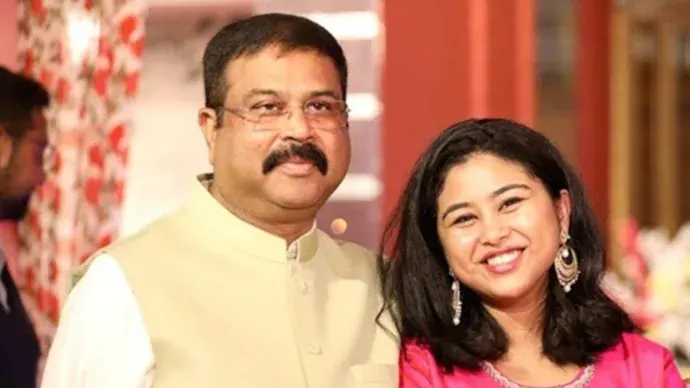
When Political Anger Spills Onto Family: The Naimisha Pradhan Story, Explained
There's a pattern that keeps repeating in Indian politics, and this week it played out again. A protest starts over one thing exam irregularities, in this case and within days, the anger has drifted somewhere else entirely. Not to policy. Not to the minister's office. To his daughter's Instagram account.
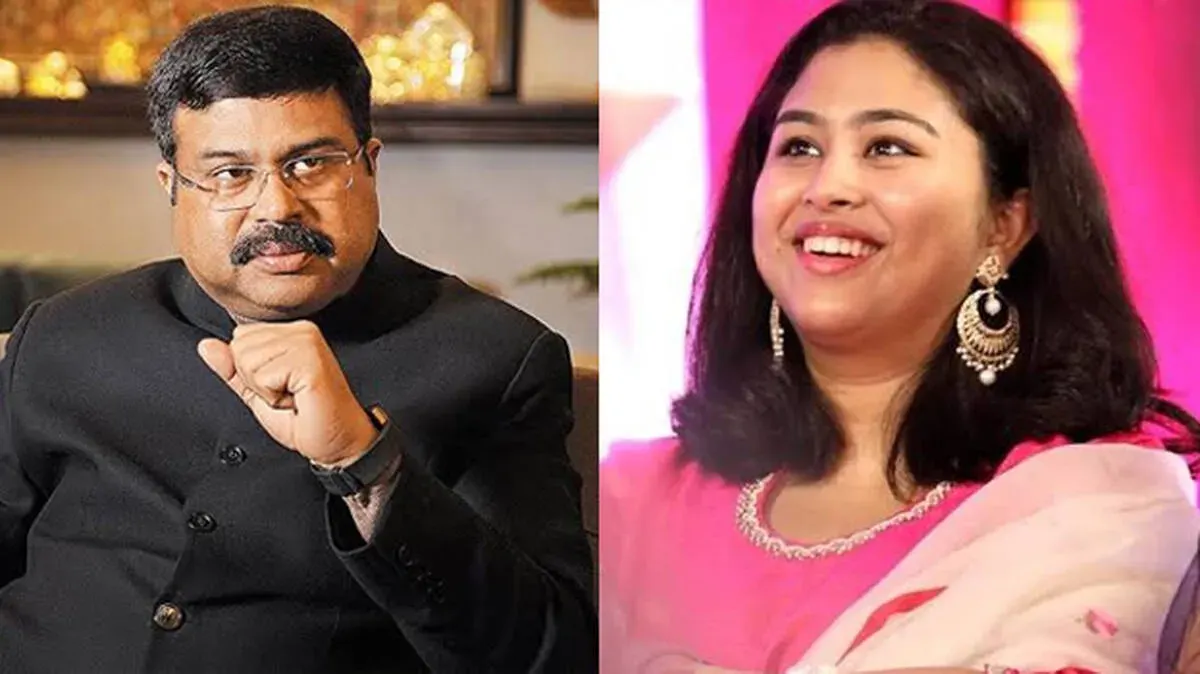
That's roughly what happened to Naimisha Pradhan, daughter of Union Education Minister Dharmendra Pradhan, over the past week. Understanding how this unfolded — and why it matters beyond one family — is the point of this piece. This is a case of online backlash against a minister's family member, and it raises questions worth sitting with: about protest, privacy, and where the line actually sits.
Why This Actually Matters
It's tempting to read this as just another social media flare-up. It isn't, really. When a protest movement shifts its target from an institution to an individual's adult child someone who holds no public office, no policy role, nothing it changes what the protest is actually about. It stops being accountability. It starts being something closer to punishment by association.
This matters for anyone who uses social media, honestly. Not just politicians' families. The mechanics on display here locating a private account, coordinating comments, spilling over onto a third party like a university are the same mechanics used against ordinary people who get caught in the wrong online moment. Cyberbullying doesn't need a famous surname to happen. It just needs an audience and a target.
What Actually Happened — The Timeline
The backdrop is the NEET paper leak controversy and a protest group calling itself the Cockroach Janta Party (CJP), which has been demonstrating at Delhi's Jantar Mantar. Their core demand: Dharmendra Pradhan's resignation as Education Minister, over what protesters allege was mishandling of the exam leak issue.
Then, on Monday, police intervened as CJP supporters tried to march toward Parliament during the ongoing Monsoon Session. That intervention seems to have been the pressure point. In the days after, the protest's online energy didn't stay focused on the ministry it turned toward Naimisha.
She'd completed an LLM at the Fletcher School of Law and Diplomacy, Tufts University, back in 2023, and now works as a senior associate at the US-India Strategic Partnership Forum. None of that is new information it's just that, suddenly, it became the story. Users found her Instagram, and the comment sections filled up. Not with debate. With demands: that her father resign, that she be expelled from a degree she'd already finished two years earlier, that she explain why she studied abroad while her father runs India's education system.
It didn't stop at her account, either. People carried the same messages onto Tufts University's own social pages tagging the institution, asking it to take action against a graduate who was, by that point, no longer even enrolled there.
By midweek, Naimisha had deactivated her Instagram account entirely.
How the Backlash Actually Spread — Step by Step
If you're trying to understand how something like this snowballs — because it's a pattern worth recognizing, not just reading about — it tends to go like this:
- A protest hits a flashpoint (here, the police action on Monday), and frustration needs somewhere immediate to land.
- Someone identifies a family member's public social account — usually because it's easy to find, not because it's relevant to the actual grievance.
- Early comments look like protest messaging. Then they start getting personal — questioning choices, credentials, motives.
- Third parties get pulled in. In this case, a foreign university that had nothing to do with any of it.
- The target either weathers it, responds, or — as happened here — steps back from the platform entirely.
Once you see the sequence laid out, it's hard not to notice how little of it actually involves the original issue.
Real-World Parallels
This isn't a one-off. Family members of politicians in India — and honestly, everywhere — have repeatedly become proxies for anger meant for someone else. It happened during earlier protest cycles too, where children or spouses of officials found themselves fielding comment floods over decisions they had no part in making. The shape is always similar: institution too big or too distant to "reach," so the mob reaches the nearest accessible person instead.
Dharmendra Pradhan, for his part, responded not by addressing the personal targeting directly but by pushing back politically — accusing opposition figures, including Congress leader Rahul Gandhi, of using students as tools to disrupt the parliamentary session, and framing the protest as politically manufactured rather than genuinely student-led.
Mistakes People Keep Making Here
The most common one: conflating "public figure" with "public figure's family." Dharmendra Pradhan holds a government office and is fair game for scrutiny over his decisions. Naimisha does not hold that office. That distinction gets lost fast in the heat of a protest, and it's worth naming clearly rather than assuming everyone already knows it.
The second mistake is assuming volume equals legitimacy. A comment section filling up with the same slogan repeated hundreds of times can feel like consensus. It's usually just coordination.
What Actually Helps, If You're Watching This Unfold
If you're trying to engage with a protest issue like NEET irregularities seriously, the more useful move is sticking to the institutional question — what happened, who's accountable, what mechanism exists to fix it — rather than the people orbiting it. It's a small shift, but it's the difference between pressure that produces answers and pressure that just produces headlines about someone's Instagram account.
A Closing Thought
There's something quietly telling about a protest that starts with an exam system and ends at a graduate's old university page. Somewhere in between, the actual question — what went wrong with NEET, and what's being done about it — got harder to find. That's usually the real cost of these pile-ons. Not just to the person targeted, but to the issue itself.
FAQs
Who is Naimisha Pradhan?
She's the daughter of Union Education Minister Dharmendra Pradhan, holds an LLM from Tufts University's Fletcher School (completed 2023), and works at the US-India Strategic Partnership Forum.
Why did she face online backlash?
Protesters connected to the CJP movement, demanding her father's resignation over the NEET paper leak issue, began targeting her Instagram account and criticizing her decision to study abroad.
Did Naimisha hold any public office or role in the NEET issue?
No. She has no official role in the education ministry or the NEET controversy.
What did Dharmendra Pradhan say in response?
He pushed back politically, accusing opposition leaders of using student issues to disrupt Parliament's Monsoon Session, without directly addressing the personal targeting of his daughter.
Is targeting a public official's family member considered cyberbullying?
Generally yes, especially when the person has no public role themselves — most platforms' harassment policies distinguish between scrutiny of public officials and pile-ons targeting private individuals connected to them.