
Why India's Monsoon Has Stalled in 2026: Five Factors Meteorologists Are Watching
The monsoon arrived in Kerala on June 4, right on schedule. That part felt promising. But then it slowed. And stalled. And as of mid-June 2026, it is sitting over Maharashtra, barely moving, while 72% of India's geographical area is recording a rainfall deficit.
India is now looking at a 41% monsoon rainfall deficit — a number that should concern farmers, city planners, and anyone who buys food.
So what exactly is going on?
India's Stalled Monsoon in 2026: The Five Factors Slowing It Down
Meteorologists from the India Meteorological Department and independent weather scientists have pointed to not one, but five simultaneous weather systems working against the southwest monsoon 2026 advance. El Nino often gets the blame in situations like this. But this year, it is more complicated than that.
El Nino conditions remain the dominant factor. El Nino refers to an unusual warming of the surface water in the central and eastern Pacific Ocean. When that water warms, it disrupts the large-scale circulation patterns that pull the Indian monsoon northward. The trade winds weaken. The moisture-laden clouds that should be moving inland get disrupted. It is a planetary-scale system, and India has no control over it.
But four other factors are compounding the El Nino effect this season.
The second is a weak cross-equatorial flow. Think of this as the highway moisture uses to travel from the southern Indian Ocean toward the subcontinent. When this flow is weak — as it currently is — the monsoon simply does not have the energy to push forward. The machinery is running on low fuel.
Third, an anticyclone over the Arabian Sea is acting as a blocker. An anticyclone is a region of high atmospheric pressure that circulates outward. When it sits in the wrong place, it pushes moisture away from the coast rather than allowing it to be pulled inland. Right now, one is sitting precisely where it should not be.
Fourth, a dry air intrusion from the northwest — hot, dry air masses moving in from desert regions — is suppressing convection. Convection is the process that forms clouds. Without clouds building up over central India, there is no mechanism to trigger rainfall even if moisture is somewhere nearby.
The fifth factor is below-normal sea surface temperatures in key parts of the Bay of Bengal. The Bay of Bengal is the other major moisture source for India's monsoon, particularly for central and north India. Cooler sea surfaces mean less evaporation, which means less moisture being pumped into the system.
Read More: India's AI Problem: Why the World's Fastest-Growing Digital Nation Is Struggling to Keep Up
What a 41% Deficit Means on the Ground Right Now
This is not just a weather story. Mumbai reportedly has around 40 days of water supply left. Farmers in Thane have been advised to delay kharif sowing. The sectors most exposed to a weak monsoon — FMCG, two-wheelers, and rural consumption generally — are already being flagged by analysts as vulnerable.
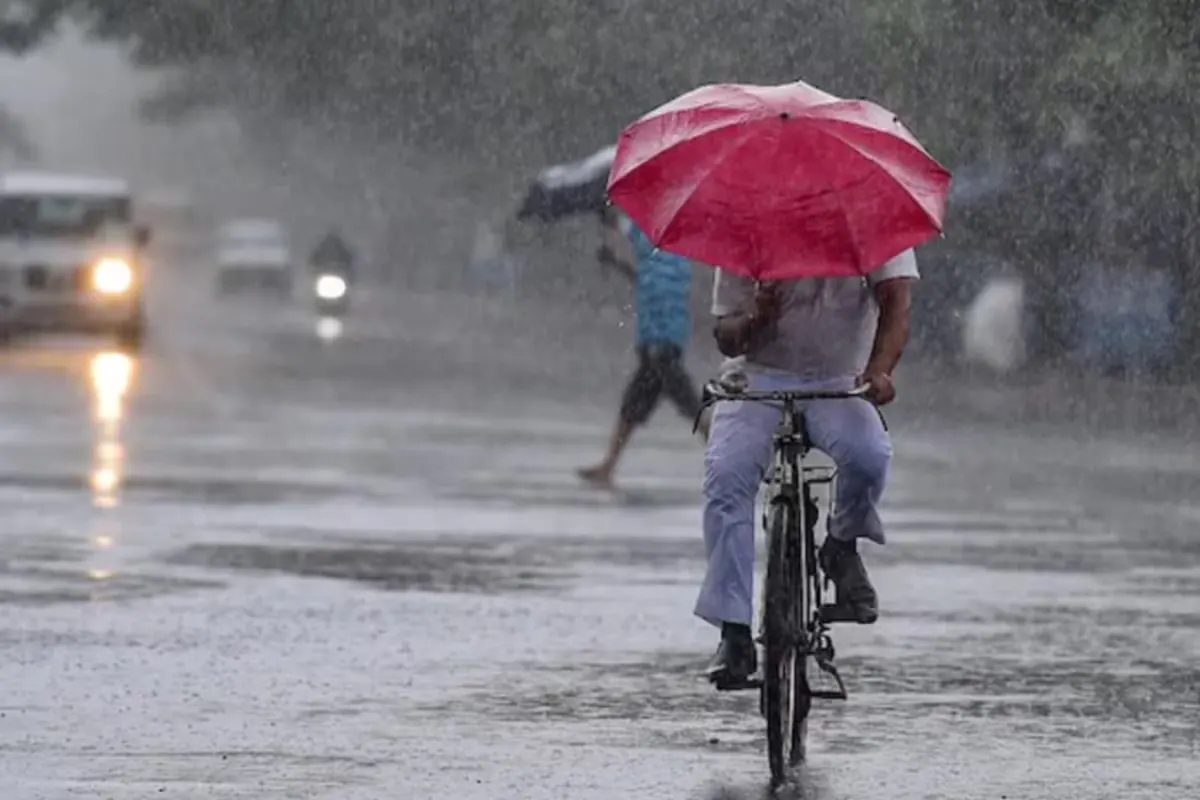
The strange part of this season is the unevenness. The Thar Desert region recorded a 154% excess in rainfall while central India's core farming belt appeared virtually cloud-free in satellite images. A monsoon that hits the desert but skips the farmland is not just unusual. It is the kind of pattern that makes recovery difficult even if rains revive later.
Will the Monsoon Recover?
Meteorologists are cautious. A deficit start to monsoon season historically makes full recovery difficult. The window for kharif crops is narrow, and every delayed week of monsoon arrival in a region narrows it further.
The IMD is monitoring all five factors actively, and forecasts will update as atmospheric conditions evolve. There are indications of some improvement in the Bay of Bengal dynamics over the coming weeks, but nothing certain yet.
Closing Thoughts
The monsoon has always been India's real prime minister — the one that actually runs agriculture, inflation, and rural income. When it stalls, the consequences move quietly but broadly: higher food prices, stressed reservoirs, deferred sowing, and an anxious rural economy.
Five things holding back the rain. And all five need to shift, even partially, before conditions improve.
Disclaimer: This article is based on information available across the web. Parchar Manch does not take responsibility for its complete accuracy, as the content could not be fully verified.
Disclaimer: This article is based on information available across the web. Parchar Manch does not take responsibility for its complete accuracy, as the content could not be fully verified.
FAQs
Why has the Indian monsoon stalled in 2026?
Meteorologists have identified five factors: El Nino conditions, weak cross-equatorial flow, an Arabian Sea anticyclone acting as a blocker, dry air intrusion from the northwest, and below-normal sea surface temperatures in the Bay of Bengal.
What is the current monsoon deficit in India?
As of mid-June 2026, India is recording approximately a 41% nationwide rainfall deficit. About 72% of India's geographical area is receiving deficient rainfall.
When did the 2026 southwest monsoon arrive in India?
The southwest monsoon arrived on the Kerala coast on June 4, 2026, roughly on schedule. However, its northward progress has since stalled over Maharashtra.
How does El Nino affect the Indian monsoon?
El Nino causes unusual warming of Pacific Ocean surface water, which disrupts global atmospheric circulation patterns. This weakens the trade winds and moisture flow that drive the Indian monsoon northward.
Which sectors are most affected by a weak monsoon?
Agriculture, FMCG, two-wheeler sales, and rural consumption broadly are the most vulnerable. A delayed or weak monsoon also raises food inflation risks and strains water reservoirs.
Can the monsoon recover after a slow start?
Recovery is possible but historically difficult when the deficit starts early in the season. The kharif crop window is time-sensitive, and prolonged delays can impact agricultural output even if rains eventually pick up.