
The World's Most Dangerous Waterway Is Closed , And the Legal Fallout Is Just Beginning
Something happened in the world economy on March 4, 2026, that most people do not fully understand yet. A narrow strip of water , 21 miles wide at its narrowest point, sitting between Iran and Oman , effectively stopped working. And when it stopped working, roughly one-fifth of the world's oil and a quarter of its liquefied natural gas had nowhere to go.
The head of the International Energy Agency described the situation caused by the Iran war as the "greatest global energy security challenge in history."
That is not a media exaggeration. That is the IEA , the body that exists specifically to assess these things , using the word "greatest" and meaning it.
Now, weeks later, the ceasefire has held in patches, but the fragile ceasefire between the US and Iran is being tested after both sides fired shots in the Strait of Hormuz. Trump's "Project Freedom" to escort commercial ships through the strait has already seen vessels hit. Oil prices have surged past $106 per barrel. Global stock markets are rattled.
And in offices, courtrooms, and contract disputes across the world , including India , a quieter but equally consequential battle is underway. A legal battle. One that touches exporters, importers, shipping companies, energy firms, insurers, and ordinary businesses whose supply chains depend on goods that now cannot move.
This is the story most people are not reading. And it is the one that will affect the most people for the longest time.
What "Force Majeure" Means , And Why It Is the Most Important Legal Term of 2026
If you have a contract , any contract involving goods, energy, shipping, or supply , the phrase force majeure just became the most consequential two words in your agreement. And most people have never properly read that clause.
Force majeure is a standard provision in commercial contracts that excuses a party from performing their obligations when an extraordinary event , a war, a natural disaster, an act of God , makes performance impossible or illegal. The theory is that you cannot be held in breach of a contract for something genuinely beyond your control.
Read More: Rajnath Singh Arrives in Berlin for Defence Talks — A Quiet Visit With Loud Global Signals
QatarEnergy, the world's largest LNG-producing company, announced on March 3 that it was declaring force majeure on its contracts with buyers, and internal sources said it would soon be shutting down gas liquefaction, as LNG tankers could not leave the Gulf.
Qatar's force majeure declaration set off a chain reaction. Energy companies passed the force majeure notice down their supply chains. Their customers passed it on. Shipping companies declared it. Logistics firms invoked it. Across thousands of contracts, one party is now telling another: "We cannot perform. The Strait is closed. This is a force majeure."
The other party is asking: "Is it, really? Does our contract actually say that? Does a war half a world away excuse you from delivering to us?"
These questions are not rhetorical. They are the questions being argued in commercial courts and arbitration panels in London, Singapore, Mumbai, and Delhi right now. And the answers depend entirely on the specific language in each specific contract , language that most businesses signed without fully reading, and without a legal advisor reviewing it for exactly this scenario.
How the Strait's Closure Is Hitting Indian Businesses , Right Now
India imports roughly 85% of its crude oil. A substantial portion of that comes from the Persian Gulf through the Strait of Hormuz.
Exports from the region typically go to Asian countries, with China, India, Japan, and South Korea accounting for 75% of oil and 59% of LNG exports.
US West Texas Intermediate crude futures rose 4.39% to settle at $106.42 per barrel, while international benchmark Brent crude futures were up 5.8% to end at $114.44 per barrel.
That is not an abstract number. Every Rs 1 increase in crude oil price eventually reaches Indian consumers , in petrol pumps, in LPG cylinders, in the price of every product that is manufactured, transported, or packaged using energy. Indian manufacturers with fixed-price supply contracts are watching their input costs soar while their sale prices are locked in. Exporters whose goods were sitting on ships stranded in the Gulf are watching delivery deadlines pass, and penalty clauses activate.
For Indian businesses, the legal questions are immediate and concrete:
Can their supplier invoke force majeure to cancel delivery without penalty? Is the business entitled to price renegotiation? Who bears the cost of goods stranded on ships that cannot move? What does the shipping insurance actually cover? If a contract was signed in India but the goods were to be shipped through the Strait, which country's law governs the dispute?
Each of these questions has a specific legal answer. But that answer lives in the contract, in the applicable law, and in the precedents being set right now by courts and arbitrators around the world. Without a business legal advisor near you who understands commercial contract law, the default position is that the stronger party , usually the larger company, the international supplier, the insurer with a dedicated legal team , wins.
Read More: Core Member Sandeep Pathak's Exit from AAP Hits Party the Most , And Here Is Why
Shipping Insurance: The Hidden Legal Battlefield
Shipping insurance is one of the main channels through which the crisis is spreading. Tanker traffic depends not just on whether ships can technically pass through Hormuz, but on whether operators can obtain war-risk coverage, whether charterers can absorb higher premiums, and whether crews are willing to enter an active conflict zone. Insurance, in effect, becomes the market's enforcement mechanism for geopolitical fear.
War-risk insurance , a specialised category of marine insurance , has historically excluded conflict zones from standard coverage. When a conflict zone expands to encompass a waterway that carries 20% of the world's oil, the entire insurance framework for global shipping breaks down.
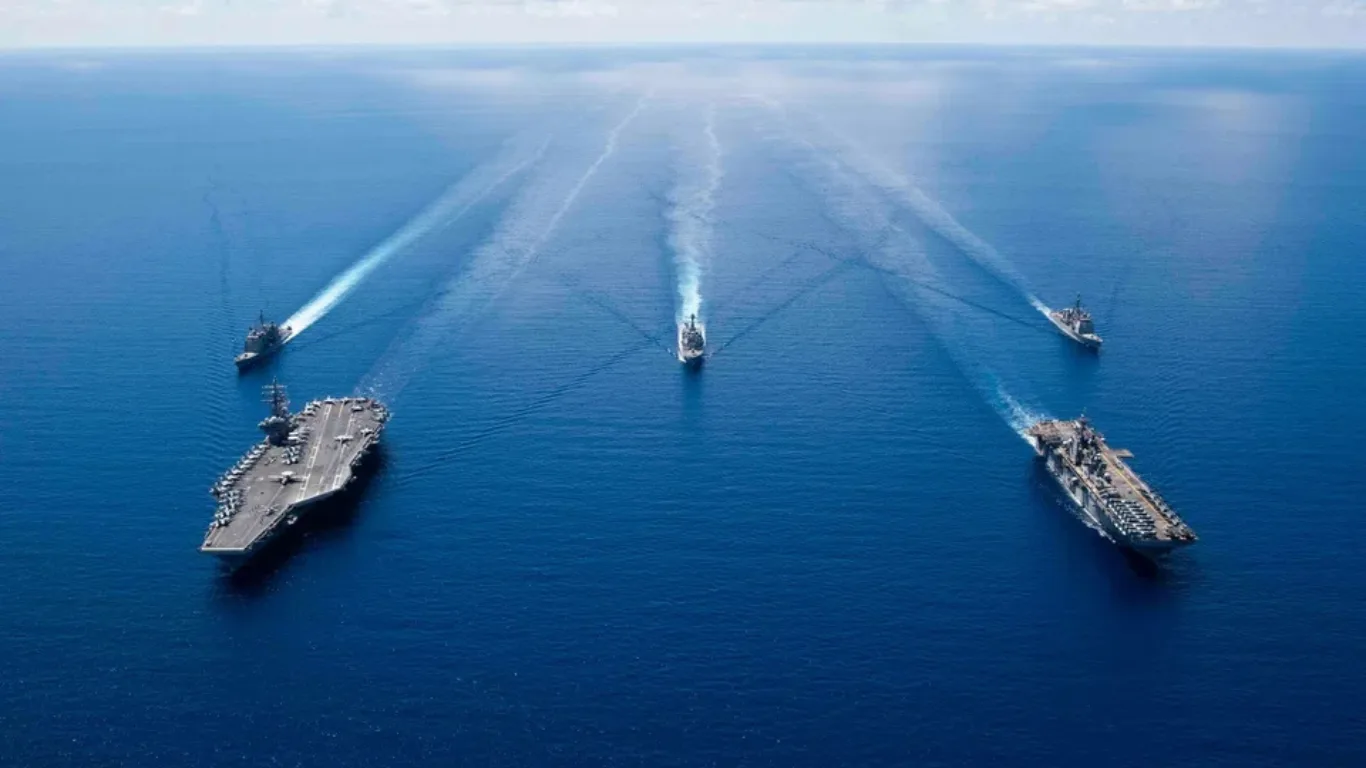
Shipping companies are filing claims. Insurers are rejecting them. The legal argument on both sides is complex: Was the Strait of Hormuz a foreseeable risk when the policy was written? Does the war-risk exclusion apply to a conflict that was not yet declared when the policy was issued? Who bears the cost of rerouting a vessel thousands of miles around the Cape of Good Hope instead of through the strait?
These disputes will be litigated for years. But the immediate decisions , whether to file a claim, how to frame it, whether to accept an insurer's rejection or challenge it , are being made right now. For Indian shipping companies, freight forwarders, and import-export businesses, having access to a maritime or commercial legal advisor is not a luxury. It is the difference between recovering costs and absorbing them.
What Every Business With International Contracts Should Do Right Now
Review your force majeure clause immediately. Not tomorrow. Today. Most standard force majeure clauses list qualifying events , war, natural disaster, government action, and act of God. The question is whether the Strait of Hormuz closure qualifies under your specific contract's language. Some contracts require that the event be unforeseeable. Others require formal notice within a specific number of days. Many businesses have already missed notice deadlines without realising it.
Check your delivery and penalty clauses. If you have a contract requiring delivery by a specific date, and that delivery is now impossible or significantly delayed due to the crisis, you need to know immediately whether you are exposed to penalties , and whether force majeure protects you or your counterparty.
Document everything. Every communication with suppliers, shipping companies, port authorities, and insurers. Every price increase, every delayed shipment, every rerouting decision. This documentation is the foundation of any legal claim or defence.
Do not accept a counterparty's force majeure notice at face value. In the short run, firms cannot easily switch suppliers, reroute shipping, or renegotiate contracts. Refineries configured for Gulf crude cannot retool overnight; LNG terminals need months to secure alternative cargoes; fertiliser buyers locked into annual procurement cycles have no immediate alternatives. This means the pressure to accept contract failures is enormous. But accepting them without legal advice may mean forfeiting significant compensation.
Consult a commercial legal advisor near you who handles international trade or contract law. This is not a matter for a general-practice lawyer. It requires someone who understands the Carriage of Goods by Sea Act, the Indian Contract Act's force majeure provisions, international commercial arbitration, and ideally has experience with cross-border supply chain disputes.
Read More: Sun Pharma's $11.75 Billion Organon Acquisition: India's Biggest Pharma Bet Explained
The Ripple Effects Ordinary People Are Not Seeing Coming
The Strait crisis is not only a boardroom problem. Its effects are filtering into everyday life in ways that create legal questions for ordinary people.
The maritime blockade triggered a "grocery supply emergency" across Gulf Cooperation Council states, with 70% of the region's food imports disrupted by mid-March, forcing retailers to airlift staples and resulting in a 40 to 120% spike in consumer prices.
Rising food prices, rising fuel costs, and supply shortages eventually produce consumer rights disputes , products not delivered as promised, prices changed mid-order, services disrupted. Indian consumer protection law is robust. The Consumer Protection Act, 2019, gives buyers real remedies when a seller fails to deliver what was promised at the price agreed. A consumer rights legal advisor near you can assess whether a business that blames the "oil crisis" for failing to honour its commitments is using a genuine legal defence or hiding behind a convenient excuse.
For employees, rising costs and business pressure are already producing workforce implications , layoffs, salary cuts, changes to service conditions. Each of these has legal parameters that employers cannot unilaterally breach, no matter what global crisis they cite.
A Thought That Stays With You
Every week that the strait remains closed, developing countries lose real income that cannot be recovered through subsequent market adjustment. The economic case for de-escalation is not merely strong, measured in food security for hundreds of millions of people; it is overwhelming.
The crisis in the Strait of Hormuz is a geopolitical event of historic scale. But it is also a legal event , one that is quietly rewriting the terms of thousands of contracts, insurance policies, and commercial relationships. The parties who understand their legal position are already acting. The ones who do not are waiting for someone to tell them what they have lost.
There is a legal advisor near you. The conversation starts with knowing where to find one.
Disclaimer: This article is based on information available across the web. Parchar Manch does not take responsibility for its complete accuracy, as the content could not be fully verified.
FAQs
What is force majeure, and does the Strait of Hormuz crisis qualify?
Force majeure is a contract clause excusing non-performance due to extraordinary events beyond a party's control. Whether the current crisis qualifies depends entirely on the specific language of your contract , not all force majeure clauses are identical. Consult a commercial legal advisor to review your specific agreement.
My supplier has declared force majeure and refuses to deliver. What are my legal options?
You have the right to challenge a force majeure declaration if the clause does not cover the specific event, if proper notice was not given within the required timeframe, or if performance was not actually impossible , just more expensive. A contract law advisor near you can assess the validity of the claim.
Who is legally responsible for goods stranded on ships unable to transit the strait?
Liability depends on the shipping contract, the Incoterms used in the sale agreement, and the applicable law. In many cases, risk transfers at a specific point in the supply chain. Determining where your risk ends and your counterparty's begins requires legal analysis of your specific contracts.
Can Indian businesses claim compensation from their insurer for losses caused by the Strait closure?
It depends on the policy. Standard marine insurance policies often contain war-risk exclusions. Specialised war-risk policies may cover certain losses. Insurers are actively contesting many claims. A maritime or insurance law advisor can determine whether your policy provides coverage and whether a rejection by an insurer can be challenged.
As an employee, can my employer cut my salary or lay me off citing the oil crisis?
Not without following the legal process required under Indian labour law. The Bharatiya Shram Samhita and applicable state labour codes set specific requirements for retrenchment, notice periods, and severance. Citing a global crisis does not override these obligations. A labour law advisor near you can tell you exactly where you stand.
How do I find a legal advisor near me who handles commercial contracts or international trade disputes?
Use a verified legal directory , this website lists advocates by location and area of specialisation. Search for "commercial law," "contract dispute," "international trade lawyer," or "force majeure legal advice" in your city or district.