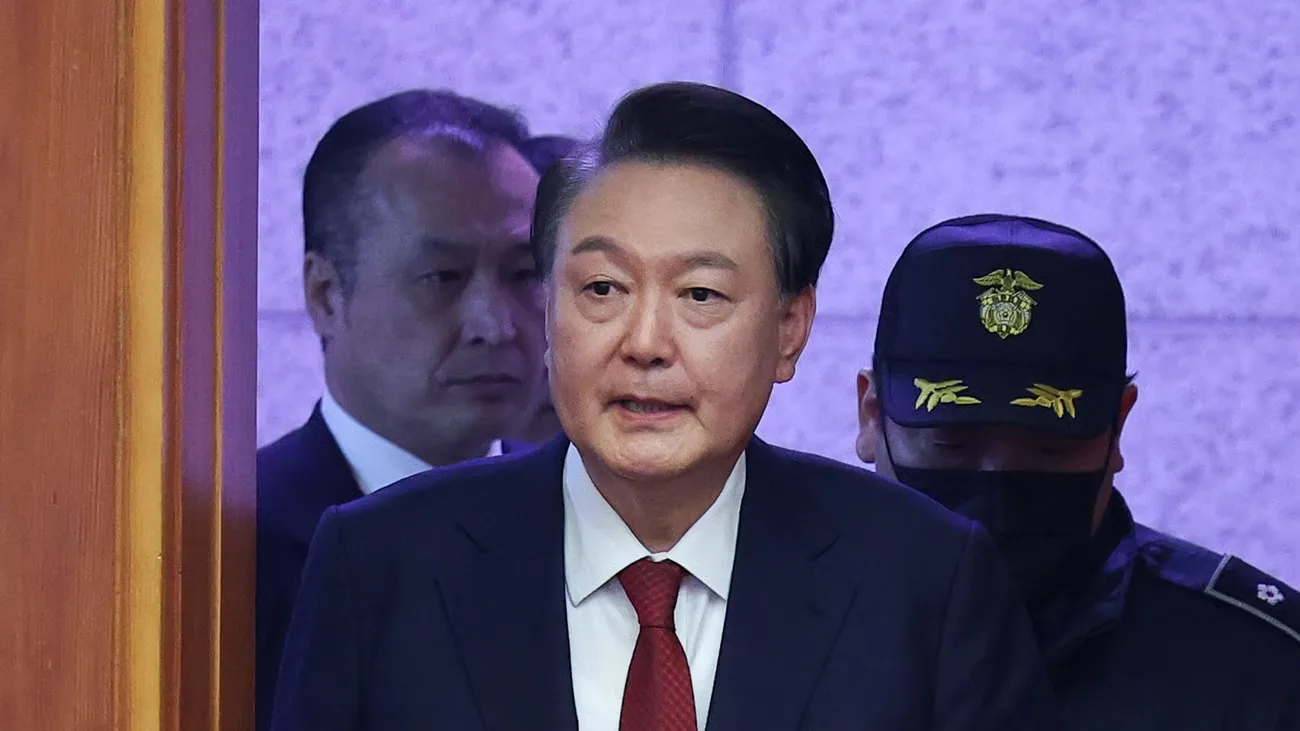
Yoon Suk Yeol Sentenced to 30 Years: The Drone Plot That Was Designed to Start a War That Never Happened
Before a country can declare martial law, it helps to have a crisis. And if no crisis exists, what happens when someone tries to manufacture one?
That, at its core, is what a Seoul court ruled on June 12, 2026, when it handed down one of the most significant sentences in South Korean political history.
A South Korean court sentenced former President Yoon Suk-yeol to 30 years in prison on Friday over charges linked to military drones sent over Pyongyang to help create a pretext for his failed December 2024 martial law declaration. The Seoul Central District Court found Yoon guilty of abuse of power and aiding the enemy, saying he had conspired in the October 2024 drone incursion from the outset.
Yoon denied wrongdoing. His lawyers offered a different explanation entirely.
Read More: Ebola Is Back and Spreading Fast: Everything You Need to Know About the 2026 Outbreak
What Exactly Were the Drones and What Did They D
The drone flights, which Pyongyang said included the dropping of propaganda leaflets, triggered a sharp rise in military tensions between the two nations in October 2024. To understand why the allegations attracted such attention, some context is important. South Korea and North Korea are technically still at war, as the Korean War ended with an armistice in 1953 rather than a formal peace treaty. Any unauthorised military incursion into North Korean airspace, even by drones, is considered highly provocative and carries the risk of escalating regional tensions. North Korea accused Seoul of flying drones over Pyongyang three times during October 2024, claims that quickly became a major diplomatic and security controversy.
The Seoul Central District Court found Yoon guilty of abuse of power and aiding the enemy, ruling that he had been involved in the alleged October 2024 drone operation from the beginning. Prosecutors argued that the flights were not part of a legitimate defensive military strategy but were instead intended to provoke a response from North Korea. According to the prosecution, the objective was to heighten fears of a security crisis and create political conditions that could be used to justify extraordinary measures, including the suspension of normal democratic processes and the expansion of executive authority.
Yoon's Defence: We Were Just Responding to North Korea
His lawyers said he neither ordered nor later approved the operation, which they said was unrelated to martial law and instead a response to months of North Korean launches across the border of balloons stuffed with rubbish.
North Korea had indeed been sending balloons loaded with waste across the border as a provocative gesture. Yoon's defence tried to frame the drone flights as a proportionate, tactical response to that , not a conspiracy. The court did not accept this argument.
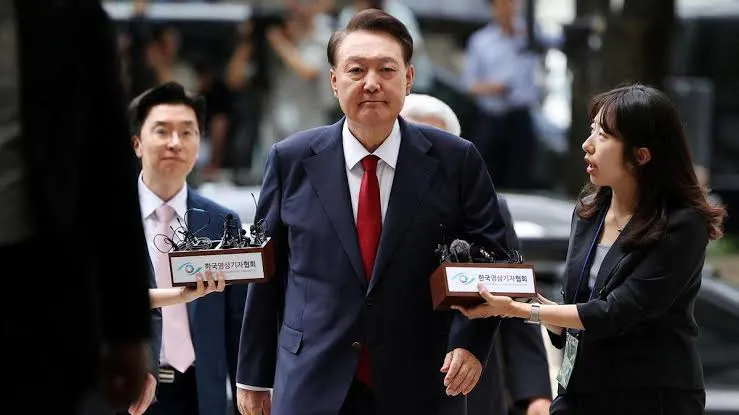
Special prosecutors, who had sought a 30-year prison term for Yoon, said in April that the ex-leader's effort to "fabricate wartime conditions" with the drones had undermined state security.
This Is Not Yoon's First Sentence , Not Even Close
The Yoon Suk Yeol North Korea drone case is only the latest chapter in a cascade of legal proceedings against the former president.
In February, a South Korean court sentenced Yoon to life in prison after finding him guilty of leading an insurrection linked to the martial law attempt. He was removed from office last year after the Constitutional Court upheld his impeachment, triggering a snap election that was won by liberal President Lee Jae Myung.
Read More: Dry Hair Care Guide 2026: Restore Softness, Shine, and Healthy Hair
So to summarise where things stand: Yoon has a life sentence for insurrection related to the martial law declaration itself, and now a 30-year sentence for the drone operation that preceded it. He has been in custody throughout, and can appeal Friday's lower court ruling.
The South Korea martial law crisis that began on the night of December 3, 2024, when Yoon sent troops to surround the National Assembly in a bid to suspend parliament, has now spawned multiple trials, multiple verdicts, and a complete restructuring of South Korean politics. The liberal opposition swept the snap election. Yoon's conservative bloc was shattered.
Why This Case Matters Beyond South Korea
The Yoon drone Pyongyang case raises a question with implications far beyond one country's political drama. What happens when a sitting head of state allegedly uses military operations involving a foreign adversary as a domestic political tool? The case has drawn international attention because it touches on issues of national security, democratic accountability, and the limits of executive power.
This is not merely an abuse-of-power charge. The court found Yoon guilty of aiding the enemy, a charge that, in many legal systems, is among the most serious accusations that can be brought against a public official, let alone a former president. Prosecutors argued that the operation was allegedly intended not to strengthen South Korea's security but to create political advantages at home. If accurate, the allegations suggest an extraordinary misuse of state authority with consequences that could have extended well beyond domestic politics.
Read More: Ram Temple Donation Fraud: How Scammers Are Exploiting Faith and What Devotees Need to Know
The ruling adds to a series of judgments against the ousted conservative leader, once South Korea's top prosecutor, whose martial law order plunged Asia's fourth-largest economy into its deepest political turmoil in decades. The case has also reignited debate about how democratic institutions should respond when leaders are accused of placing personal or political interests above national interests.
The man who was once the country's chief law enforcement officer is now serving consecutive sentences for crimes linked to the very responsibilities he was entrusted to uphold. There is something quietly staggering about that, even for those who have followed the story from the beginning. Regardless of political perspective, the case is likely to remain a significant chapter in South Korea's modern political history and a subject of discussion among legal and political observers around the world.
Read More: “Our Customers Are in America”: Why Opendoor Shut Its India Operations and Fired 250 Employees
Disclaimer: This article is based on information available across the web. Parchar Manch does not take responsibility for its complete accuracy, as the content could not be fully verified.
FAQs
What was Yoon Suk Yeol sentenced to 30 years for?
Yoon Suk Yeol was sentenced to 30 years in prison after being found guilty of abuse of power and aiding the enemy. The court ruled that he was involved in an alleged drone operation over Pyongyang in October 2024, which prosecutors claimed was designed to provoke tensions with North Korea for political purposes rather than national security.
Does Yoon already have another sentence?
Yes. In February, a South Korean court sentenced Yoon to life in prison after finding him guilty of leading an insurrection linked to the martial law attempt.
What did the drones actually do over Pyongyang?
The drone flights, which Pyongyang said included the dropping of propaganda leaflets, triggered a spike in military tensions between the nations in October 2024.
What is Yoon's defence in the drone case?
His lawyers said he neither ordered nor approved the operation, arguing it was a response to months of North Korean balloon launches across the border and was unrelated to martial law.
Can Yoon appeal the 30-year sentence?
Yes. Yoon, who is already in custody, can appeal Friday's lower court ruling.
Who is currently South Korea's president?
After the Constitutional Court upheld Yoon's impeachment, a snap election was triggered and won by liberal President Lee Jae Myung.