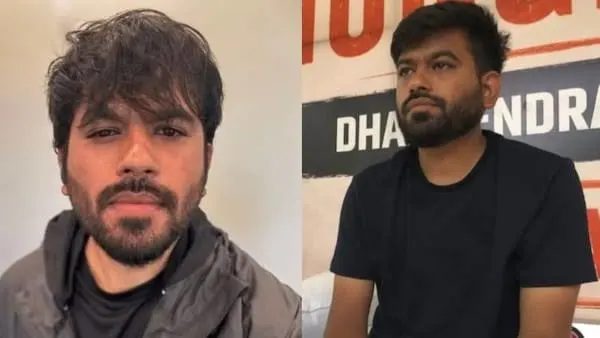
CJP Founder Abhijeet Dipke: How a Job-Hunting 30-Year-Old Built India's Loudest Youth Movement
Here's the detail that still gets me. The man now credited with helping force out a Union Cabinet minister was, by his own account, sitting in a Boston apartment playing PlayStation and filling out job applications when he posted the tweet that started all of it. No campaign war room, no political dynasty behind him. Just frustration, a decent sense of internet timing, and a courtroom insult that landed wrong. That's CJP founder Abhijeet Dipke, and understanding who he actually is helps explain why this movement grew the way it did, fast, loud, and impossible for the government to simply ignore.
Let me walk through his background, how the Cockroach Janta Party actually came together, and why his past work history matters more than people initially assumed.
Why This Actually Matters
If you've been following India's exam reform crisis, you've already seen the name CJP everywhere, tied to weeks of protests, a minister's resignation, and now a national debate over police conduct at Jantar Mantar. But movements don't build themselves, someone shapes the message, and in this case, that someone had actual professional experience doing exactly that. Understanding Dipke's background isn't just biographical trivia. It changes how you read the entire movement, whether you see it as a spontaneous youth uprising or a carefully built campaign using satire as its delivery mechanism, and honestly, it's probably some of both.
Who Abhijeet Dipke Actually Is
Here's the simplest framing. Think of him less as an accidental activist and more as a communications professional who happened to find the right moment. Dipke was born on September 29, 1995, in Aurangabad, Maharashtra, a city now officially renamed Chhatrapati Sambhajinagar. He studied journalism in Pune before moving to the United States, where he earned a Master's degree in Public Relations from Boston University's College of Communication.
That academic background matters, because before Cockroach Janta Party existed, Dipke had already spent years working in political communications. Reports describe him working with the Aam Aadmi Party's social media and digital campaign team roughly between 2020 and 2023, including time in communications roles connected to the Delhi Chief Minister's Office and the Delhi Education Department. He left that world in 2023 to pursue his master's degree abroad, and it was during that gap, while job hunting after finishing his studies, that CJP was born.
How the Movement Actually Started, Step by Step
The origin story is worth laying out plainly, because it explains the tone of everything that followed.
- On May 15, 2026, Chief Justice of India Surya Kant made remarks comparing unemployed youth to "cockroaches" and "parasites of society" during a Supreme Court hearing.
- Dipke, reacting to that comment, founded the Cockroach Janta Party the very next day, May 16, 2026, as a satirical online platform rather than a formal political party.
Read More: Telegram Banned in India Over NEET Paper Leak: What the Delhi High Court Battle Really Means
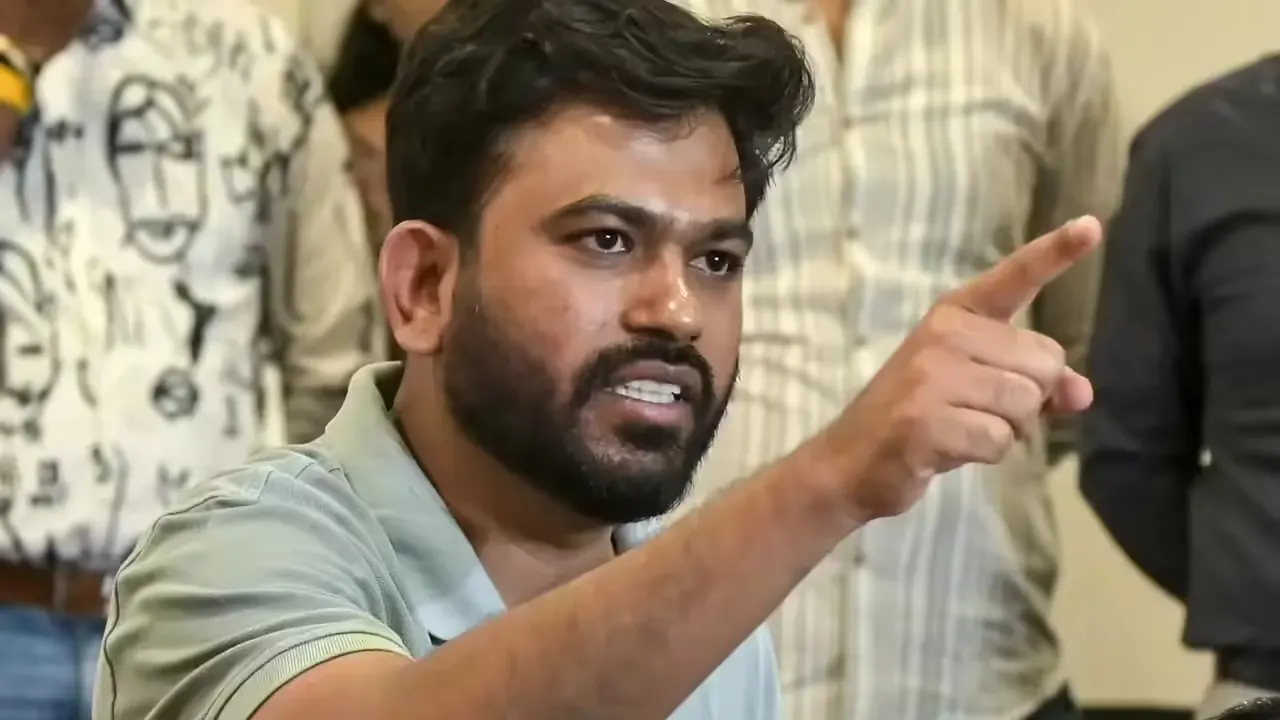
- The name itself is a pointed parody of the ruling Bharatiya Janata Party, a linguistic jab that made the satire obvious from the start.
- Within days, the movement had over 350,000 sign-ups and more than 20 million followers on Instagram, spreading through memes, reels, and parody content rather than traditional campaign material.
- It evolved from purely online activity into physical protests, with volunteers appearing at demonstrations dressed in cockroach costumes, and eventually into sustained sit-ins at Delhi's Jantar Mantar demanding accountability over the NEET-UG paper leak.
Real-World Signs of How Fast This Actually Grew
What makes this genuinely remarkable isn't just the numbers, it's the speed. Within three days of founding CJP, the movement had racked up over a lakh sign-ups, a functioning website, a party anthem, and a five-point manifesto. Prominent political figures, including Mahua Moitra, Kirti Azad, and Prashant Bhushan, publicly voiced support. When Dipke arrived at Indira Gandhi International Airport in June 2026, the first thing he showed waiting media was a copy of Dr. B.R. Ambedkar's biography, a deliberate signal tying the movement to constitutional and social justice framing rather than pure comedy.
The CJP is not registered with the Election Commission of India as a political party. It operates as a satirical movement engaging with unemployment, exam corruption, and governance issues without contesting elections in the traditional sense, at least for now.
Mistakes People Keep Making When Judging This Movement
The easy mistake is treating CJP as either purely spontaneous grassroots anger or purely engineered political theater, when it's genuinely both. Critics have pointed to Dipke's AAP background as evidence the "outsider" framing is misleading, arguing someone with real campaign-strategy experience built this, not a political first-timer. That's a fair observation. But it doesn't erase the fact that the anger CJP is channeling, over paper leaks, unemployment, and institutional accountability, is real and widely shared, regardless of who happened to be skilled enough to give it a viral shape.
Pro Tips for Understanding Where This Goes Next
If you want to judge whether CJP has staying power beyond this crisis, watch whether it formalizes into something more structured, official registration with the Election Commission, a clearer leadership hierarchy, actual electoral participation, rather than remaining a loosely organized online-first movement. Satirical movements built on a single viral moment often struggle to sustain momentum once the triggering outrage fades. Whether Dipke and CJP make that transition, or whether this becomes a defining moment that eventually dissolves, is the real test ahead.
Closing Thoughts
There's something fitting about a movement built by someone trained in public relations using satire, of all things, to hold institutions accountable. Whether history remembers Abhijeet Dipke as the person who genuinely shifted how young Indians engage with politics, or as a skilled communicator who caught lightning in a bottle once, probably depends less on this moment and more on what CJP decides to become next.
FAQs
Who is Abhijeet Dipke?
He's a 30-year-old Indian political communication strategist from Aurangabad (Chhatrapati Sambhajinagar), Maharashtra, and the founder of the Cockroach Janta Party.
What is the Cockroach Janta Party?
It's a satirical political movement founded in May 2026, using memes, satire, and digital campaigns to highlight issues like unemployment, exam corruption, and government accountability in India.
Why is it called the "Cockroach" Janta Party?
The name responds to a remark by Chief Justice of India Surya Kant, who compared unemployed youth to "cockroaches" during a May 2026 Supreme Court hearing, and it also parodies the ruling Bharatiya Janata Party's name.
Did Abhijeet Dipke have political experience before founding CJP?
Yes. He worked with the Aam Aadmi Party's social media and campaign teams roughly between 2020 and 2023, including communications roles connected to the Delhi government, before leaving to pursue graduate studies.
Is the Cockroach Janta Party a registered political party?
No, it is not currently registered with the Election Commission of India, and it operates primarily as a satirical movement rather than a party contesting elections.
What role did CJP play in Dharmendra Pradhan's resignation?
CJP led sustained protests over the alleged NEET-UG paper leak that put significant public pressure on the government, which contributed to Education Minister Dharmendra Pradhan's eventual resignation.