Colombia's 2026 Presidential Runoff: How "El Tigre" Beat the Left by Less Than 1% and What It Means for the Country
By less than one percentage point. That is the margin by which Colombia chose its next president on June 21, 2026. After weeks of one of the most polarised election campaigns the country has seen in years, far-right candidate Abelardo de la Espriella defeated left-wing Senator Iván Cepeda in the Colombia presidential runoff with 49.65 per cent of the vote against Cepeda's 48.70 per cent, according to preliminary results from the National Registry.
With 12.9 million votes, de la Espriella became the most voted presidential candidate in Colombian history. The country he will govern is a deeply divided one.
Why the Colombia Presidential Election 2026 Matters Beyond Latin America
The result carries implications well beyond Bogotá. Colombia is the United States' closest security partner in South America, a country whose cooperation on narcotics, migration, and regional stability directly shapes US foreign policy objectives. Under outgoing President Gustavo Petro, US-Colombia relations deteriorated sharply. Trump's administration sanctioned Petro under counternarcotics authorities in September 2025, and the State Department revoked his visa. That context makes the ideology of Colombia's incoming president a matter of genuine geopolitical consequence.
De la Espriella ran on closer security ties with Washington, expanded oil exploration, lower taxes, and a confrontational approach toward armed criminal organisations. He received a public endorsement from Trump on Truth Social the day after the first-round results. Brazil's Flavio Bolsonaro called to endorse him. Ecuador's President Daniel Noboa met with him before the runoff.
The international alignment of Colombia's new president is already visible before he has taken office.
Who Is Abelardo de la Espriella, "El Tigre"
The 47-year-old is a lawyer and businessman who has never held elected office. He qualified for the presidential ballot not through a major political party but through citizen signatures, a detail his campaign used to underline his self-described outsider status. His movement is called "Defenders of the Homeland."
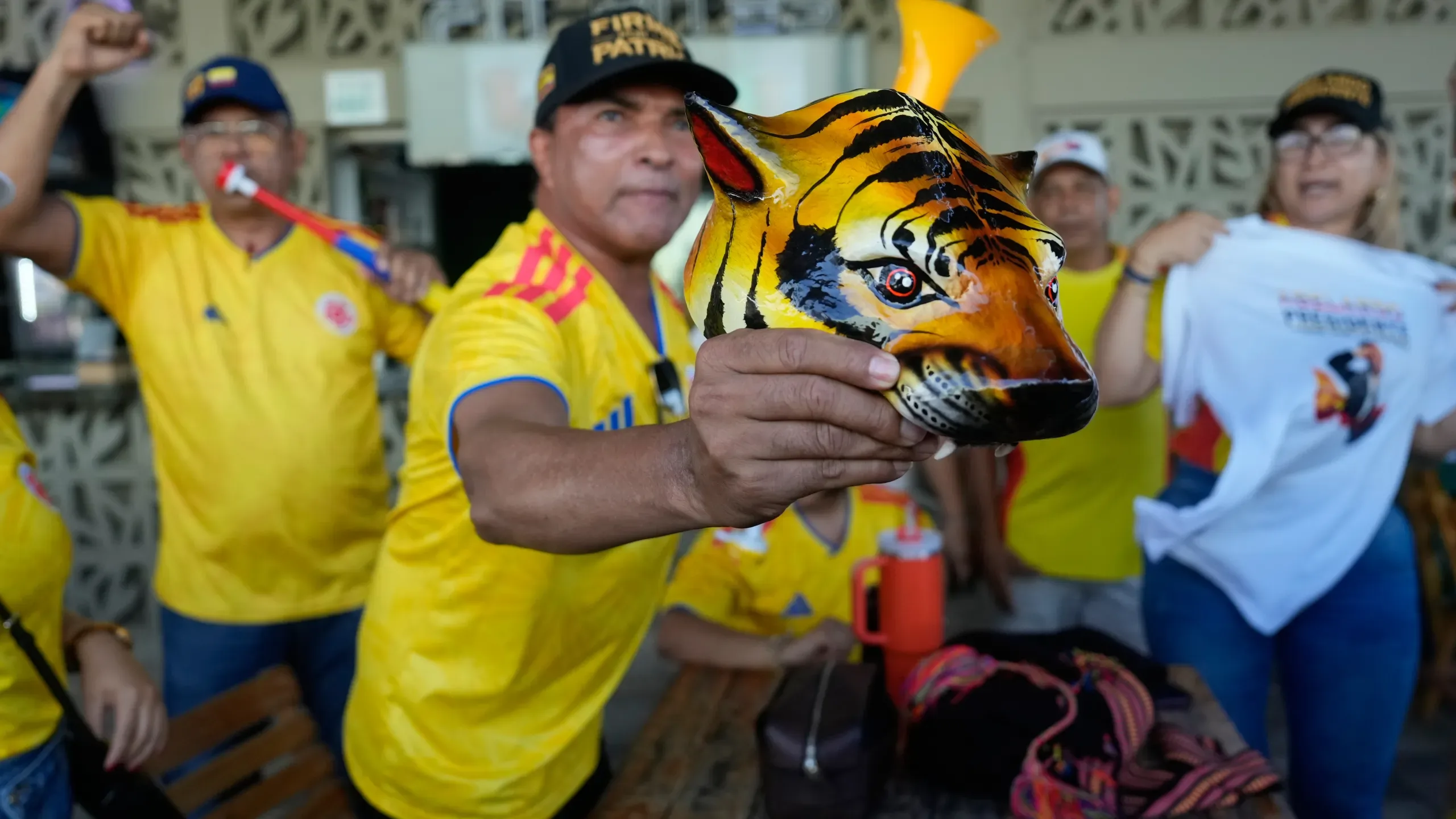
Known by the nickname "El Tigre" (The Tiger), de la Espriella built his candidacy through social media, large rallies, and strong backing from evangelical churches. He drew explicit comparisons to El Salvador's Nayib Bukele with promises to build ten mega-prisons and pursue criminals with the same blunt force that dropped El Salvador's homicide rates dramatically, though those methods also drew significant human rights criticism internationally.
His platform includes opposition to abortion, adoption by same-sex couples, and what he calls "gender ideology." He has promised to govern through emergency decrees in the initial phase to move quickly on crime. His economic vision leans toward liberalisation: lower taxes, expanded fossil fuel exploration, and a reset of the relationship with the United States.
What Iván Cepeda Represented and Why He Came So Close
Cepeda is a left-wing senator and member of the ruling Historic Pact coalition, Petro's party. His campaign positioned him as the continuation of Petro's reform agenda, including the president's "Total Peace" policy of negotiating with armed guerrilla groups and criminal gangs. He earned more first-round votes than Petro did in 2022, suggesting that Petro's base mobilised behind him effectively.

But the "Total Peace" policy is, as one analysis by the US Congress Research Service noted, generally regarded as a failure. Homicides in Colombia reached 14,780 last year, the highest since at least 2015. Extortions more than doubled since 2015. Violence defined daily life in ways that created genuine anxiety across the political spectrum. That violence is what de la Espriella's campaign leaned into, and it worked.
Cepeda acknowledged the preliminary result but urged supporters to wait for the final binding count by the National Electoral Council, which can slightly adjust the figures. The gap is narrow enough that the final tally matters.
Read More: I Am a Cockroach": How India's Gen Z Protest Movement Stormed Delhi Over Exam Irregularities
The Polarisation Colombia Now Carries Forward
A voter in Bogotá described the mood with precise accuracy: "Right now, what worries me is the polarization that exists between us. There are two very extreme sides, and the violence is concerning. What I hope is that people accept who won. Let's not go out and fight."
That sentence captures something real. De la Espriella won on a culture war platform that energised his base but left roughly half the country on the other side. Petro's exit approval rating sits at around 50 per cent, meaning his supporters will not simply disappear into the background.
Former President Álvaro Uribe, whose hardline security legacy de la Espriella is consciously inheriting, congratulated him. Former third-place candidate Paloma Valencia, who backed de la Espriella in the runoff, also offered congratulations.
The new president takes office on August 7, 2026.
Closing Thoughts
Colombia's runoff result is razor-thin, historically significant, and politically volatile all at once. A candidate with no prior elected office, backed by evangelical churches and social media momentum, defeated a left-wing candidate backed by the outgoing government by less than one percentage point to become the most-voted presidential candidate in the country's history.
That is a remarkable result. The real test begins on August 7, when the rhetoric of the campaign meets the complexity of a country where 14,780 people were killed last year and the peace negotiations that were supposed to end that violence largely did not.
Disclaimer: This article is based on information available across the web. Parchar Manch does not take responsibility for its complete accuracy, as the content could not be fully verified.
FAQs
Who won the Colombia presidential runoff 2026?
Far-right candidate Abelardo de la Espriella won the June 21 runoff by a margin of less than 1 per cent, taking 49.65 per cent to Iván Cepeda's 48.70 per cent, according to preliminary results from the National Registry.
Who is Abelardo de la Espriella?
De la Espriella is a 47-year-old Colombian lawyer and businessman who has never held elected office. He qualified for the ballot through citizen signatures and ran under his movement "Defenders of the Homeland." Known as "El Tigre," he is a conservative nationalist who received endorsements from Donald Trump and Flavio Bolsonaro.
What did Iván Cepeda stand for in the 2026 Colombia election?
Cepeda, a left-wing senator and member of President Petro's Historic Pact coalition, campaigned on continuing Petro's progressive policies, including the "Total Peace" programme of negotiating with armed groups, labour reforms, and fighting inequality.
Why did Donald Trump endorse a candidate in Colombia's election?
Trump endorsed de la Espriella after the first-round results, praising his tough-on-crime stance and alignment with US priorities on drug trafficking and security. US-Colombia relations had soured significantly under Petro, whom Trump sanctioned in 2025. De la Espriella promises to restore those ties.
When does Colombia's new president take office?
The winner of the 2026 presidential runoff takes office on August 7, 2026.
Will the close result lead to an official recount?
Iván Cepeda acknowledged the preliminary result but urged supporters to await the final binding count by Colombia's National Electoral Council, which can adjust preliminary figures slightly. With a margin of under 1 per cent, the final count carries meaningful weight.