Congo Ebola Outbreak 2026: Why Africa CDC Says This Could Be the Deadliest in History
There is a number that keeps appearing in every update coming out of the Democratic Republic of Congo right now. Over 837. That is the confirmed case count for the current Ebola Bundibugyo virus outbreak in DRC, a figure that keeps rising every few days. And the people tracking it say the worst is still ahead.
Africa CDC has issued a stark warning: this outbreak could become the deadliest Ebola outbreak ever recorded. Not worst in recent memory. Ever. That kind of language from public health officials does not arrive lightly.
Why This Outbreak Is Different
Most Ebola outbreaks in Congo have been contained, difficult but eventually brought under control. This one is fighting back in ways that make containment genuinely hard.
The outbreak was declared a Public Health Emergency of International Concern by the WHO about a month ago. Since then, cases have spread into more health zones than responders had anticipated. Two new zones were confirmed affected just days ago. The outbreak has also crossed into Uganda, where patients reportedly fled across the border.
Here is the part that should concern anyone following this: over 28,000 contacts of confirmed cases are not being traced. Contact tracing is the backbone of Ebola outbreak response. When that breaks down, the virus moves quietly, reaching people no one is watching.
Africa CDC has also flagged a USD 21.5 million funding gap. Resources are stretched thin.
What Is the Bundibugyo Strain, and Why Does It Matter
Not all Ebola strains are the same. The Zaire strain, most familiar from the deadly 2014-2016 West Africa outbreak, kills roughly 50 to 90 percent of those infected without treatment. Bundibugyo Ebola virus has a somewhat lower fatality rate, but that does not mean it is minor. It still kills. It spreads through direct contact with bodily fluids of infected persons, living or deceased.
The strain was first identified in Uganda's Bundibugyo district in 2007. This current outbreak, concentrated in eastern DRC's Ituri province, is the largest Bundibugyo event ever recorded.
What Is Actually Going Wrong on the Ground
Eastern Congo is not an easy place to run a public health response. Armed conflict makes entire areas inaccessible. Aid workers report that the response is near collapse in some zones. Oxfam has flagged a lack of clean water as a significant barrier. MSF has warned of dangerous gaps. The Red Cross says the outbreak has not yet peaked and could last a year.
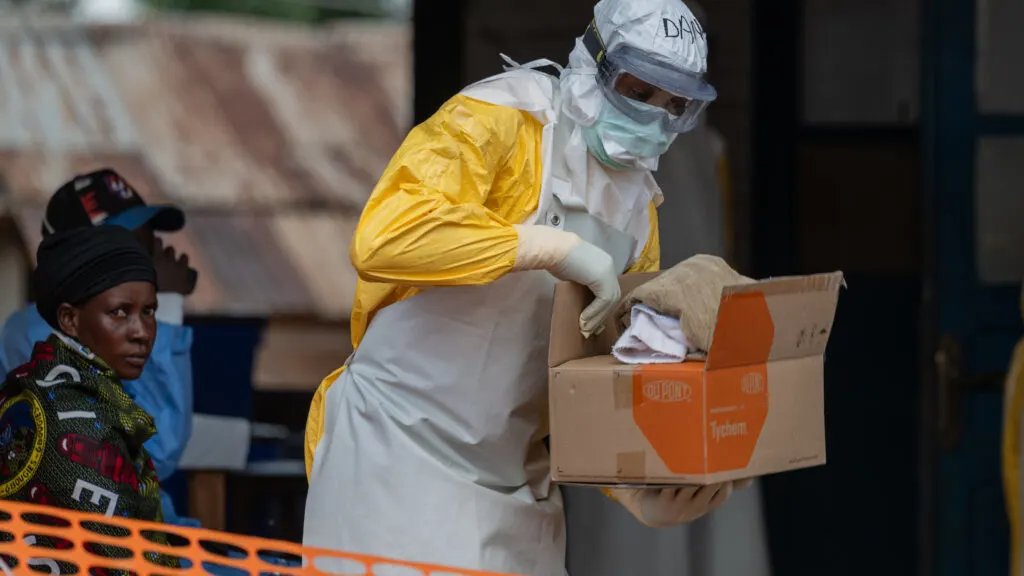
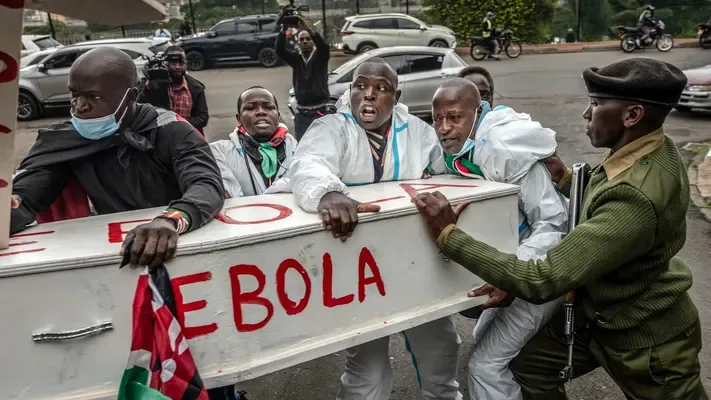
Community distrust is making everything harder. Some residents reportedly do not believe Ebola is real. Others are receiving treatment too late, because fear or misinformation delays the decision to seek help. Burial practices in some communities involve physical contact with the deceased, which is one of the highest-risk transmission routes.
Add to that the tens of thousands of displaced people living in crowded camps with inadequate sanitation, and the conditions are almost textbook for viral hemorrhagic fever transmission.
What the Global Response Looks Like Right Now
A high-level African Union meeting chaired by Burundi's president raised USD 910 million in pledges. The WHO Director-General listed seven priorities emerging from that summit. Direct Relief is sending over 250,000 pieces of protective equipment to DRC. Africa CDC is coordinating with the DRC and Ugandan governments and multiple international partners.
But pledges are not the same as money on the ground. And coordination is not the same as control.
Experts including epidemiologists note that because access to many affected areas is restricted by conflict, the true size of this DRC Ebola 2026 outbreak remains unknown. Models from the ECDC are being used to estimate spread, but they come with wide uncertainty bands.
Read More: Xi Jinping Visits North Korea After Seven Years: What Kim Jong Un Told Him Before He Even Landed
Closing Thoughts
What is unfolding in eastern Congo right now is a reminder that disease outbreaks are never just a health story. They live at the intersection of conflict, poverty, governance, and trust. The virus is the visible thing. But what allows it to spread unchecked is almost always something less visible.
A response needs more than medicine. It needs roads, functioning government, communities that believe help is genuine, and funding that arrives before the outbreak peaks. The question for the coming weeks is not whether this outbreak can be contained. It is whether the conditions for containment can be built fast enough.
Read More: Iran-Israel War 2026: What's Really Happening, Why the US Is In the Middle, and What Comes Next
Disclaimer: This article is based on information available across the web. Parchar Manch does not take responsibility for its complete accuracy, as the content could not be fully verified.
FAQs
What is the Ebola Bundibugyo virus?
It is a strain of the Ebola virus first identified in Uganda in 2007. It spreads through direct contact with bodily fluids of infected or deceased people and causes severe hemorrhagic fever.
How many Ebola cases have been confirmed in DRC in 2026?
As of mid-June 2026, confirmed cases have crossed 837, with the number still rising and new health zones being affected.
Has the Ebola outbreak spread outside Congo?
Yes. Uganda has also reported cases, with some patients reportedly having crossed the border from DRC.
Why is this Ebola outbreak considered potentially the worst ever?
Africa CDC has warned it could surpass all previous Bundibugyo outbreaks in scale. Over 28,000 contacts are untraced, conflict limits access, and the outbreak has not yet peaked.
Is there a vaccine available for the Bundibugyo strain?
The available Ebola vaccines target primarily the Zaire strain. There is no specific approved vaccine for the Bundibugyo strain, making containment through isolation, contact tracing, and community engagement especially critical.
What can the international community do?
Fund the response, support community engagement programs, clear the USD 21.5 million funding gap Africa CDC has identified, and ensure aid workers have safe access to conflict-affected areas.