Iran's President Offered to Quit — And the Reason Points to a Country Running Without Its Leader
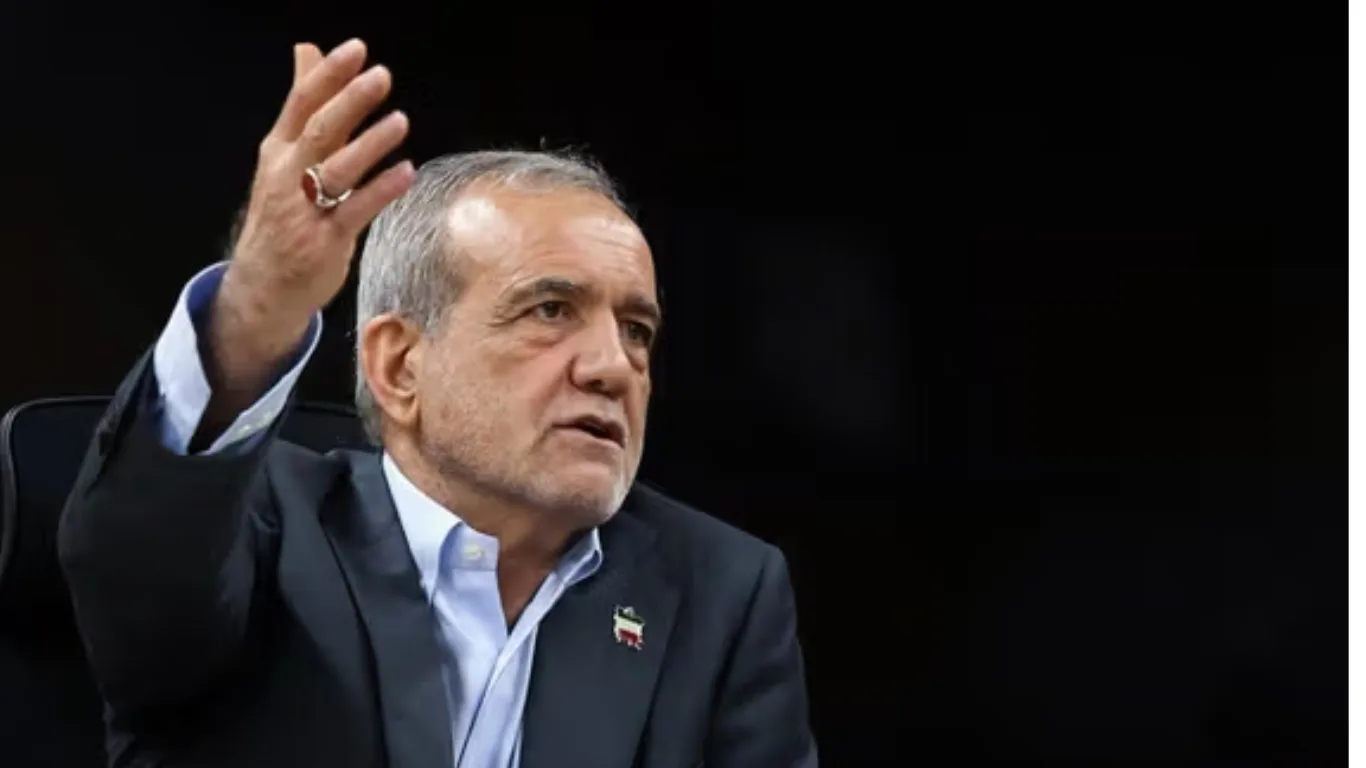
Iranian President Masoud Pezeshkian's resignation letter, reportedly sent to Supreme Leader Mojtaba Khamenei's office on Sunday, May 31, 2026, has sent shockwaves across the world. The report, which first emerged from Iran International, a London-based outlet covering Iranian affairs, paints a picture of a president who has become a figurehead in his own government.
The Iranian presidency denied it within hours. But the denial itself raised more questions than it answered.
What the Resignation Report Actually Said
An anonymous official told Iran International that the letter called out the fact that the Islamic Revolutionary Guard Corps (IRGC) had effectively taken over large portions of the government, and that the president and other high-ranking officials had been cut out of vital decision-making.
That is a remarkable claim. Not a complaint. Not a protest. A formal letter to the Supreme Leader saying: I cannot do my job anymore.
In the letter sent on Sunday, Pezeshkian stressed that the president and the government had effectively been excluded from major and vital decision-making processes in the country, and that the vacuum created by this situation had enabled hardline factions within the IRGC to take control of affairs. Pezeshkian added that under such circumstances he was unable to run the government and carry out his legal responsibilities, and for that reason requested to step down immediately.
Read More: Power Shifts 2026: A Clear Look at India’s Changing Political Scene
Who Is Pezeshkian — and Why Does This Matter?
Masoud Pezeshkian was elected in 2024 as a reformist candidate, offering Iran a rare moderate voice at the top. His win was seen as a signal that many Iranians wanted change: a government more focused on the economy, less isolated internationally, and less dominated by hardline military factions.
Instead, the IRGC appears to have tightened its grip.
This comes after months of tensions between the government and the Islamic Republic's military-security institutions. Iran International previously reported that the IRGC had gradually restricted many presidential powers and effectively taken control of key parts of the government.
A reformist president, hemmed in on all sides. That is the situation, if these reports are accurate.
The Core Dispute: War and Its Economic Cost
The resignation, according to sources, was not just about power. It was about something far more immediate for ordinary Iranians.
Anonymous sources told Iran International that the primary source of the differences between Pezeshkian and the head of the IRGC, who is believed to currently hold the lion's share of power in the regime, was "the way the war was managed and its destructive consequences on the people's livelihoods and the country's economy."
This is worth pausing on. Iran has been through severe economic disruption, and the man elected to manage civilian governance reportedly felt he had no actual authority over the decisions shaping daily life for millions of people.
Read More: Trump's Iran Deal: The "Final Determination" That Nobody Has Made Yet
Tehran's Official Response: "Ridiculous Media Games"
Just hours later, Iran International posted a correction on X (formerly Twitter), citing the IRGC-linked Tasnim News Agency. Tasnim reported, quoting an unnamed government source, that "President Masoud Pezeshkian has not resigned and continues to carry out his duties" — directly refuting the earlier claim. Seyed Mehdi Tabatabaei, Deputy Director of Communications and Information at the presidential office, also rejected the report in a separate post, stating Pezeshkian "will not withdraw from serving the people."
The denial was swift. But it is worth noting that it came from IRGC-linked media and a presidential communications official — both sources with strong incentives to suppress news of internal dysfunction.
The Bigger Picture: Who Actually Runs Iran Right Now?
Here is where things get genuinely unsettling.
Mojtaba Khamenei, son of the late Supreme Leader Ali Khamenei, assumed the position of Supreme Leader in March 2026, following a period of extraordinary political turbulence in Iran. Last week, US officials revealed to CBS that Khamenei is hidden in a secret location with little access to the outside world, only reachable through a "labyrinth" of couriers.
So the president reportedly cannot govern. The Supreme Leader is reportedly in hiding. The IRGC is reportedly calling the shots.
It is not yet clear whether Mojtaba Khamenei will accept the president's resignation, but the contents of the letter point to a deep and unprecedented rift at the highest levels of power.
Read More: DK Shivakumar Is Finally Becoming Karnataka Chief Minister: The Wait, The Deal, and What Comes Next
What This Means for Iran — and the World
Even if the resignation is eventually confirmed as false or exaggerated, the report itself reveals the credibility of the underlying tension. Journalists, analysts, and diplomats globally have noted for months that Iran's civilian government has been losing ground to IRGC commanders.
A country of 90 million people, sitting on massive energy reserves, in the middle of ongoing geopolitical tension, potentially being run by an unelected military body with no democratic accountability — that is not a minor story.
Closing Thoughts
What is most striking about this story is not the resignation letter itself. It is the possibility that it describes something true, even if the letter was never sent. A president cut off from power. A Supreme Leader unreachable. A military institution filling the vacuum.
History tends to move quietly before it moves loudly. This may be one of those moments.
Disclaimer: This article is based on information available across the web. Parchar Manch does not take responsibility for its complete accuracy, as the content could not be fully verified.
Read More: The Cockroach Janta Party: India's Gen Z Turned Humiliation Into a Political Warning Shot
FAQs
Has Pezeshkian officially resigned?
No official resignation has been confirmed. Iran's presidential office denied the report, calling it false. The original claim came from Iran International, citing an anonymous source.
What is the IRGC and why is it controversial?
The Islamic Revolutionary Guard Corps is Iran's elite military and ideological force. It controls vast economic interests and security infrastructure, and has long been accused of operating parallel to and above the civilian government.
Who is the current Supreme Leader of Iran?
Following the death of Ali Khamenei, his son Mojtaba Khamenei assumed the position of Supreme Leader in March 2026.
Why would Pezeshkian want to resign?
According to the report, he felt he had been completely sidelined from major government decisions, particularly around the management of the ongoing war and its economic impact on Iranian citizens.
Is Iran International a reliable source?
Iran International is a London-based outlet with a strong anti-regime stance. Its reports are frequently cited by international media but should be read with awareness of its editorial position and reliance on anonymous sources in this particular case.
What happens if the resignation is accepted?
If accepted, it would trigger a constitutional process to elect or appoint a new president, further deepening the political uncertainty already gripping Iran's leadership structure.