Kevin Warsh Drops Forward Guidance at His First Fed Meeting — Here Is What That Really Means for You
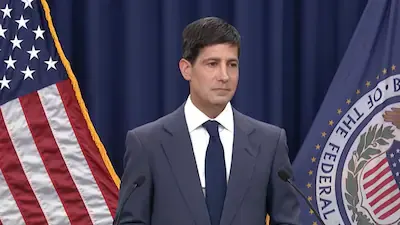
The Federal Reserve held its first policy meeting under a new chairman on June 17, 2026, and the outcome was not really about interest rates. Rates stayed put. That part was widely expected. What nobody quite predicted was the quiet but significant shift in how Federal Reserve Chairman Kevin Warsh plans to run one of the most powerful economic institutions in the world.
He did not just hold rates steady. He rewrote the rulebook.
Why Kevin Warsh Dropping Forward Guidance Is a Much Bigger Deal Than It Sounds
Most people hear "Federal Reserve meeting" and mentally file it under "things economists care about." Fair enough. But this meeting genuinely affects borrowing costs on your mortgage, how much your savings earn, and whether the stock market jolts upward or dips on a Wednesday afternoon.
Warsh has long criticised the Fed's dot plot and the broader practice of forward guidance, which is the central bank's habit of signaling where interest rates are likely headed months or years in advance. His concern is that telegraphing future decisions locks the Fed into a course it may later need to abandon, reducing its ability to respond to real-world data as it arrives.
At his first press conference, Warsh stated plainly: "As a general proposition, forward guidance isn't the business we should be in."
That single sentence represents a fundamental change in how the Fed will communicate with markets, businesses, and ordinary people.
What Forward Guidance Actually Is (And Why It Existed in the First Place)
Think of it this way. Imagine your landlord told you in January: "Your rent will definitely not go up until at least December." You would plan your finances accordingly. That is essentially what the Fed has been doing with interest rates. It telegraphed its moves months ahead of time so that banks, investors, and businesses could plan.
Warsh has pointed to former Chair Alan Greenspan's approach as a model: letting data drive decisions meeting by meeting rather than broadcasting intentions well in advance. Less forward guidance means investors would need to watch incoming data more closely, rather than relying on the Fed to map out the rate path.
No more advance notices. No more certainty baked into every market move. The Fed, under Warsh, will watch the numbers and decide when it is time.
What Happened at the June FOMC Meeting: The Key Facts
The Federal Open Market Committee (FOMC) held rates steady at a range of 3.5% to 3.75% at the conclusion of its June meeting, a move widely anticipated by markets.
But almost everything else was new.
Warsh announced five task forces to rethink monetary policy. He revamped the Fed's policy statement, making it shorter and simpler. He also did not submit his own projection to the dot plot. That last point is significant. The dot plot is an anonymous chart showing where each policymaker expects rates to go. Warsh confirmed he was the missing dot, abstaining consistent with his long-held views on the Summary of Economic Projections as currently structured.
Eighteen policymakers submitted projections. The chairman did not. That is not a small gesture.
Read More: Keir Starmer to Announce Social Media Ban for Under-16s: What It Could Mean for Millions of Families
What the Fed's Five Task Forces Are Reviewing
The task forces will examine Fed communications, including reconsidering the quarterly Summary of Economic Projections, as well as the Fed's inflation framework itself. Warsh said the topics are "timely, consequential, and worthy of a fresh look."
This signals a broader institutional overhaul is coming, not just a change in tone.
The Inflation Context Nobody Can Ignore
With inflation at its highest level in more than three years, the Fed left its benchmark rate unchanged. A wartime spike in energy prices has pushed rate cuts off the table entirely.
The U.S. consumer price index in May grew at a 4.2% annual rate. The personal consumption expenditures price index rose at a 3.8% rate year-on-year in April. The Fed's target remains 2%. There is a long distance between 4.2% and 2%.
The CME Group's FedWatch tool showed traders pricing in a 60.7% chance of a rate hike taking place in October. Not a cut. A hike. That tells you everything about how markets read Warsh's first appearance.
What This Means If You Are Not an Economist
For anyone with a home loan, savings account, or any interest in financial markets, this shift matters practically.
When the Fed gives forward guidance, investors price it into assets almost immediately. When that guidance disappears, uncertainty increases. The most interesting thing about this meeting is Warsh's debut and what it means for how we see the Fed moving forward, as noted by NerdWallet senior economist Elizabeth Renter.
Mortgage rates, bond yields, and even the returns on high-yield savings accounts all respond to expectations about where the Fed is headed. With Warsh refusing to signal a path, that uncertainty becomes part of the financial landscape for borrowers and investors alike.
The honest summary: fewer hints, more watching, more reacting.
Read More: India's AI Problem: Why the World's Fastest-Growing Digital Nation Is Struggling to Keep Up
The Question of Federal Reserve Independence
There is a layer to this story that goes beyond economics. President Trump nominated Warsh amid political pressure on the Fed, making questions of Federal Reserve independence central to how his tenure is being assessed. Warsh is under heavy scrutiny as to whether he will prove a vehicle for White House preferences on rates.
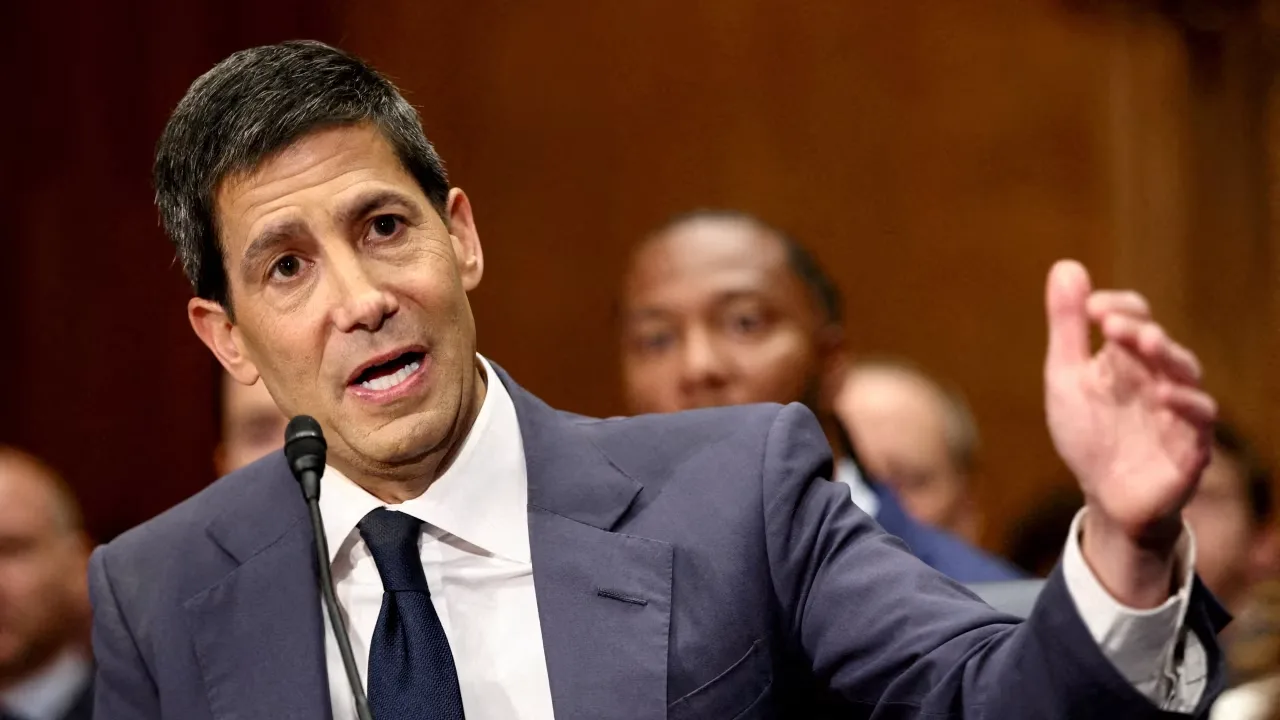
Warsh has vowed that the Fed will remain "strictly independent" in overseeing monetary policy. At his Senate confirmation hearing, he stated: "Inflation is a choice, and the Fed must take responsibility for it."
His refusal to submit dot plot projections and his commitment to price stability over any political preference for rate cuts reads, to many observers, as a deliberate statement of that independence.
Closing Thoughts
Something genuinely new happened at the Fed on June 17, 2026. Not a rate cut, not a hike, not a surprise announcement. Just a quiet but unmistakable signal that the rules of how the central bank speaks to the world are being rewritten.
Whether Warsh's data-driven, guidance-free approach proves more effective than the method it replaces will take years to determine. What is clear today is that the era of the Fed mapping its own path in advance, for markets to follow with confidence, is over. At least for now.
Disclaimer: This article is based on information available across the web. Parchar Manch does not take responsibility for its complete accuracy, as the content could not be fully verified.
FAQs
What did Kevin Warsh decide at his first Fed meeting?
Warsh held interest rates steady at 3.5% to 3.75% and announced the Fed would no longer offer forward guidance on where rates are headed. He also abstained from submitting his own dot plot projection and launched five task forces to review Fed operations.
What is forward guidance and why does it matter?
Forward guidance is when the Fed signals its future plans for interest rates, allowing markets and businesses to prepare. Removing it means investors must rely on incoming economic data rather than Fed hints, adding uncertainty to financial markets.
Is a rate hike coming in 2026?
Markets are currently pricing in a significant probability of a rate hike later in 2026, driven by inflation running above 4% annually, well above the Fed's 2% target.
Why did Warsh not submit a dot plot projection?
Warsh has long criticised the Summary of Economic Projections as locking policymakers into predetermined paths. His abstention is consistent with his stated view that forward guidance can reduce the Fed's flexibility to respond to changing economic conditions.
What are the five Fed task forces reviewing?
The task forces will examine Fed communications, the quarterly Summary of Economic Projections, and the Fed's inflation framework, among other areas, signaling a broad institutional overhaul under Warsh's leadership.
How does this affect ordinary people?
Anyone with a mortgage, savings account, or investment portfolio is indirectly affected. Greater uncertainty about the rate path can lead to more volatility in borrowing costs and financial markets, requiring more active monitoring of economic data.