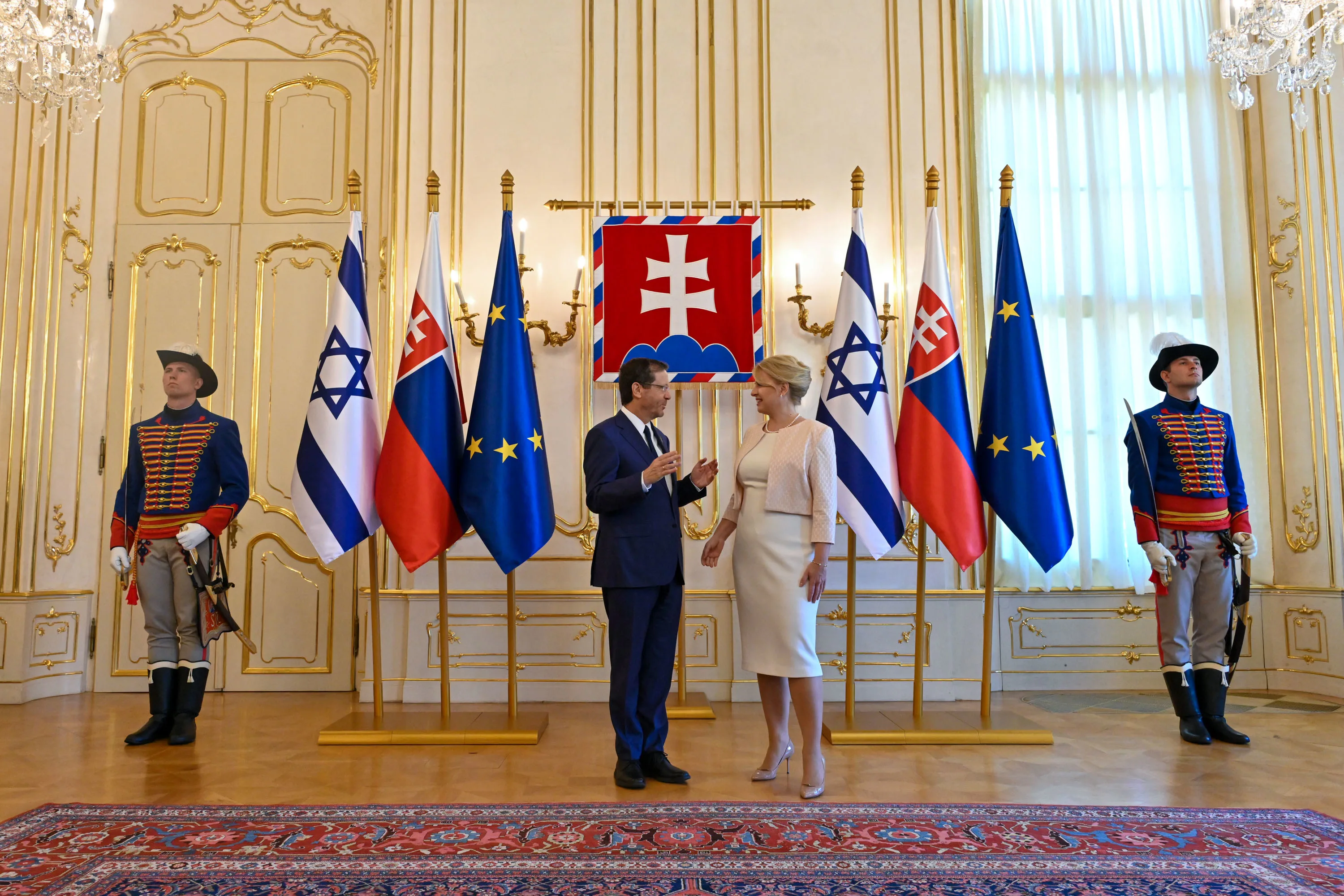
Modi's Historic Slovakia Visit: India Upgrades Ties to Comprehensive Partnership in a Fractured Europe
No Indian Prime Minister had ever set foot in Slovakia since the country gained independence in 1993. That 33-year gap closed on June 15, 2026, when Prime Minister Narendra Modi landed in Bratislava for a State Visit to Slovakia that was quietly significant in ways that go well beyond a ceremonial handshake.
This was not a routine diplomatic stop. It was a signal.
Why PM Modi's Slovakia Visit Matters Right Now
Europe is not the unified bloc it once tried to be. The Russia-Ukraine conflict has fractured the continent's political consensus. Slovakia, under Prime Minister Robert Fico, has taken positions on the war that put it at odds with many EU partners. And yet, here was India's Prime Minister choosing Bratislava, choosing Fico, choosing this particular moment for a first-ever bilateral visit.
That choice tells you something about how New Delhi reads the European map right now. India is not aligning with blocs. It is building bridges, one capital at a time.
India and Slovakia Elevate Ties to a Comprehensive Partnership
The headline outcome of the visit is this: India and Slovakia agreed to upgrade their bilateral relationship to a Comprehensive Partnership. That is a formal diplomatic classification that signals intent to deepen ties across multiple domains simultaneously. Not just trade. Not just culture. Across the board.
The two Prime Ministers agreed to elevate the relationship to a Comprehensive Partnership with the aim of taking bilateral relations to a new level, strengthening existing cooperation mechanisms, and exploring new avenues for cooperation, both bilaterally and multilaterally.
Before this visit, relations between the two countries were described as a "traditional friendship." Warm but not particularly active. The Comprehensive Partnership changes the framework entirely.
What India and Slovakia Actually Agreed On
The list of outcomes from this visit is long. Here is what matters most.
Defence cooperation got a formal footing for the first time. Both sides signed a Letter of Intent on Defence Cooperation, covering defence technologies, research and development, and industrial collaboration. Slovakia is an EU and NATO member with a functioning defence industry. For India, that is a meaningful access point.
Read More: Keir Starmer to Announce Social Media Ban for Under-16s: What It Could Mean for Millions of Families
Counter-terrorism was a strong theme. Both leaders unequivocally condemned terrorism in all its forms and manifestations, including cross-border terrorism, and strongly condemned the terrorist attack in Pahalgam, Jammu and Kashmir, on 22 April 2025. They agreed to establish a Joint Working.
Group on Counter-Terrorism. Slovakia's explicit condemnation of the Pahalgam attack carries diplomatic weight inside the EU framework.
Digital technology was another concrete area. A Memorandum of Understanding on Digital Technologies was signed, with cooperation planned in artificial intelligence, semiconductors, 5G, 6G, and the Internet of Things. The two leaders also expressed commitment to supporting each other in safeguarding information technology systems against emerging quantum threats, including preparedness for post-quantum security transitions.
On trade, both sides welcomed the conclusion of the India-EU Free Trade Agreement negotiations in January 2026 and called for its early signing and implementation. Slovakia's manufacturing strengths in automotive and electronics align well with India's scale and innovation capacity.
A Moment of Shared Remembrance in Bratislava
Prime Minister Modi paid tribute to the fallen soldiers of Slovakia at the Tomb of the Unknown Soldier in Bratislava, laying a wreath alongside Prime Minister Fico at the memorial honouring soldiers pivotal in Slovakia's liberation during World War II.
It is a small gesture in protocol terms. But in diplomatic language, it is full of meaning. It says: we see your history, we respect it.
What This Visit Signals About India's European Strategy
India is not picking sides in Europe's internal divisions. It is picking relationships, carefully, with countries that matter economically and geopolitically even if they do not make the loudest noise. Slovakia sits at the heart of Central Europe, bordering Austria, Hungary, Czech Republic, Poland, and Ukraine.
The two sides agreed to support the development of cooperation with regional groupings such as the Slavkov 3, Visegrad 4 and 3 Seas Initiative, including interconnected and mutually beneficial infrastructure projects that promote connectivity, sustainable economic growth and regional integration.
That is India plugging into Central Europe's infrastructure and political architecture through Slovakia. Quietly. Deliberately.
Read More: India's AI Problem: Why the World's Fastest-Growing Digital Nation Is Struggling to Keep Up
Disclaimer: This article is based on information available across the web. Parchar Manch does not take responsibility for its complete accuracy, as the content could not be fully verified.
FAQs
Is this PM Modi's first visit to Slovakia?
Yes. This visit is the first by an Indian Prime Minister to Slovakia since its independence in 1993, marking a historic milestone.
What is the Comprehensive Partnership between India and Slovakia?
It is a formal diplomatic upgrade that commits both countries to deeper cooperation across defence, trade, technology, culture, and multilateral issues.
Did India and Slovakia sign any agreements?
Yes. Multiple MoUs were signed, covering digital technologies, defence cooperation, higher education, labour migration, audio-visual production, and post-quantum cryptography.
What is Slovakia's position on India's UN Security Council bid?
India appreciated Slovakia's continued support for India's permanent membership in a reformed and expanded UN Security Council.
Why did Modi choose to visit Slovakia now?
Analysts suggest the visit reflects India's deliberate strategy of engaging individual European countries, especially those with independent political voices, to build a diversified diplomatic network rather than engaging with Europe only through bloc-level institutions.