Four Nations, One Room: What the Quad Foreign Ministers' Meeting in New Delhi Really Signals
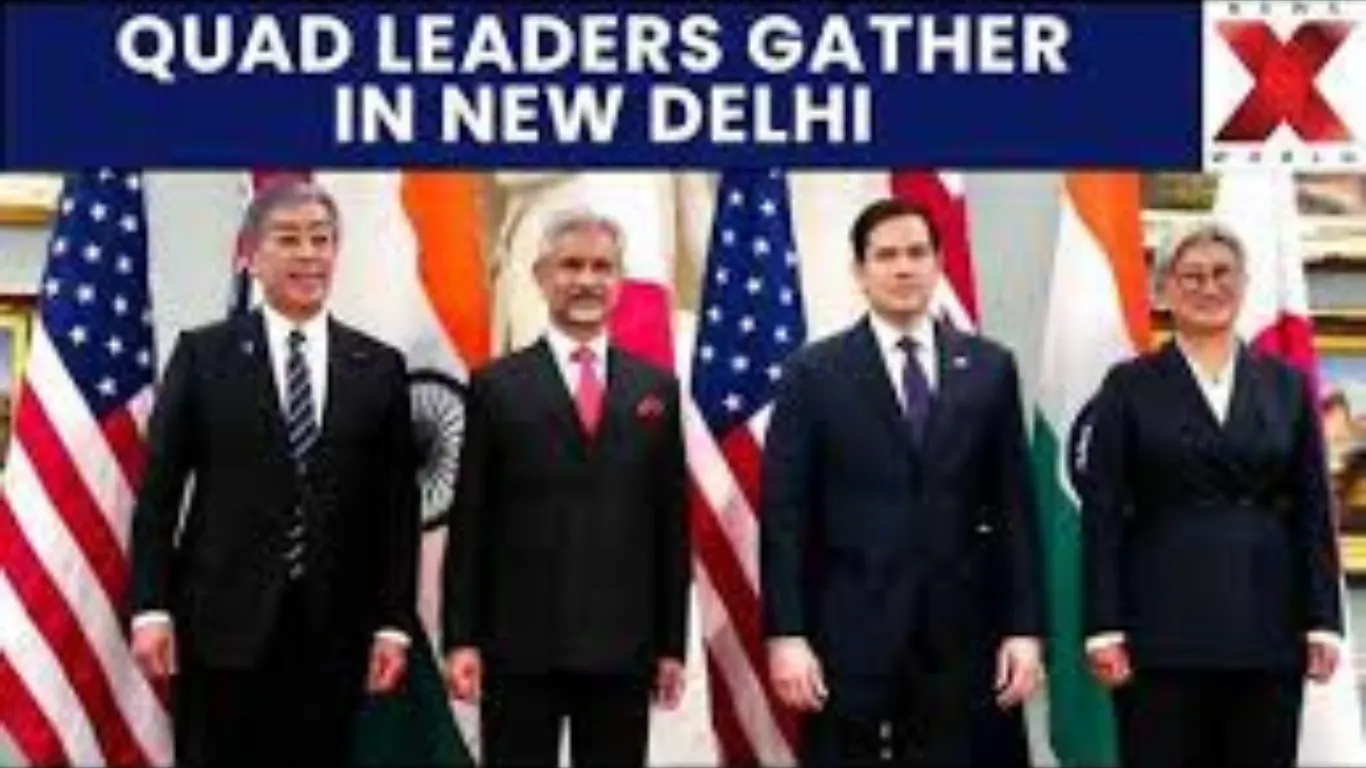
Quad Foreign Ministers' Meeting — the phrase sounds like routine diplomatic scheduling. But what happened at Hyderabad House in New Delhi on May 26, 2026, was anything but routine. Four of the world's most consequential democracies sat down together at a moment when the Indo-Pacific is tense, global supply chains are fragile, and the question everyone in diplomatic circles is quietly asking is: is the Quad still relevant?
The short answer is yes. The longer answer is more complicated — and far more interesting.
Why the Quad Foreign Ministers' Meeting in New Delhi Matters Right Now
The foreign ministers of Australia, India, Japan, and the United States gathered in New Delhi to strengthen cooperation in the Indo-Pacific and address their shared concern over China's growing regional influence. That sounds measured, almost understated.
But the backdrop tells a different story. The meeting came just days after US President Donald Trump visited China — a trip watched closely in New Delhi for any signals of a shift in Washington's approach toward Beijing. That's the kind of context that makes every word spoken at a foreign ministers' table carry extra weight.
Read More: Oil Prices Rise: How US Navy Blockade of Iran Impacts Supply
India's agenda was clear: to revamp, re-energize, and consolidate the relevance and activeness of the Quad grouping, which had previously hit a roadblock. External Affairs Minister Dr. S. Jaishankar chaired the meeting, joined by US Secretary of State Marco Rubio, Australian Foreign Minister Penny Wong, and Japanese Foreign Minister Toshimitsu Motegi.
What Exactly Is the Quad — And Why Should You Care?
Think of the Quad as a strategic alliance between four democracies that share a geographical and political stake in keeping the Indo-Pacific region open, free, and stable. It is not a military bloc in the traditional sense. There are no formal treaties, no shared armies. What it offers instead is coordination — on maritime security, critical minerals, emerging technologies, energy supply chains, and regional infrastructure.
The Quad's commitment centers on boosting regional maritime, economic, technology, and supply chain security in the Indo-Pacific. In plain terms: the four nations want to make sure that the seas between them stay open for trade, that no single power rewrites the rules by force, and that smaller nations in the region have credible partners to turn to.
What Was on the Table: The Agenda Behind Closed Doors
US Secretary of State Rubio, who arrived in India on Saturday ahead of the meeting, said that Washington wants the Quad to move beyond being a dialogue platform and take more concrete action on issues including maritime security and critical minerals. That is a significant statement. Rubio essentially signaled an impatience with talk — a push for results.
Read More: Global Oil Supply: How US-Iran Conflict Impacts Oil Prices
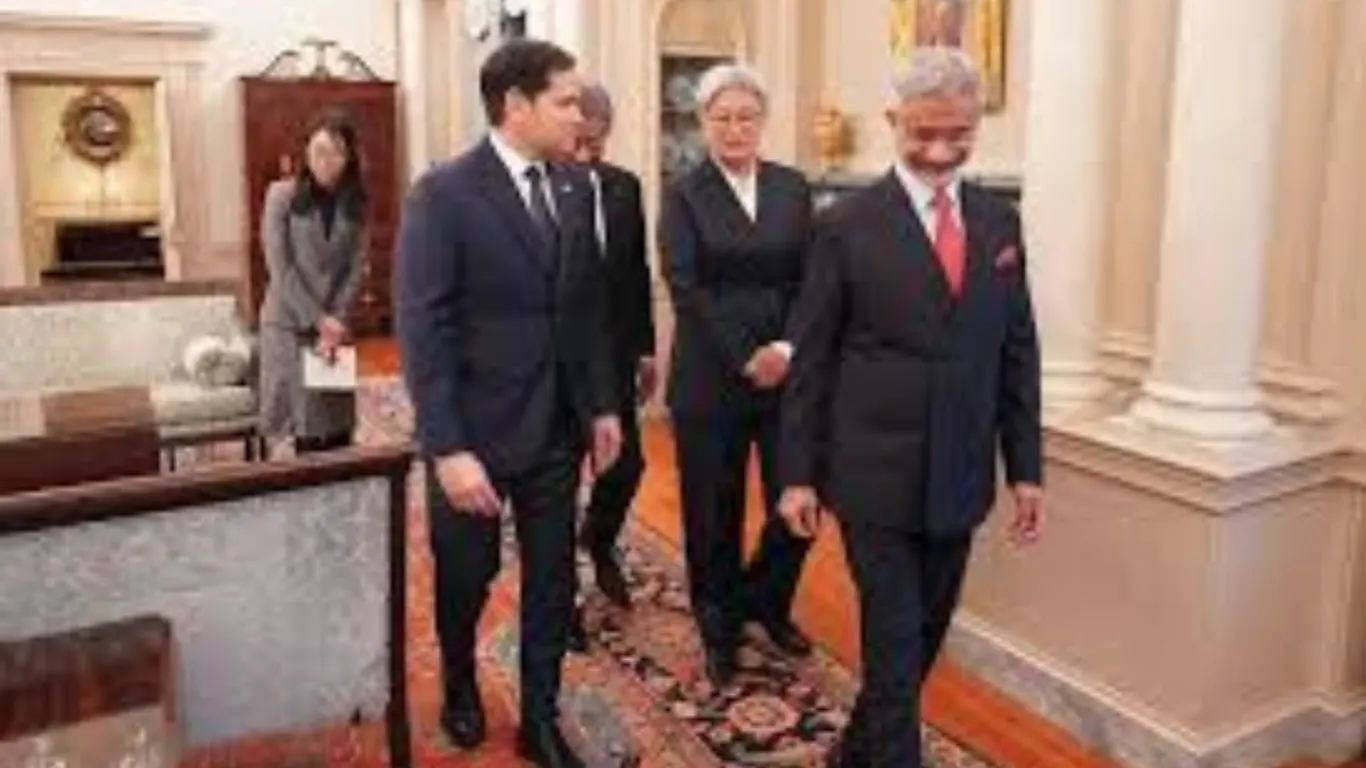
The specific initiatives announced at the meeting reflect that energy. Rubio announced the launch of the Indo-Pacific Maritime Surveillance Co-operation initiative — a tangible new mechanism rather than a general declaration.
Meanwhile, Jaishankar framed the meeting with a broader economic lens. The Indo-Pacific, he stated, must remain a driver of global growth. And that wasn't rhetorical. The ongoing Iran crisis has put energy supply disruptions and maritime chokepoints firmly on the Quad agenda. Officials were also working toward a summit of the four leaders later this year, though no date has been confirmed.
The Shadow Over the Room: Trump's China Visit and What It Means
There is something unavoidable sitting in the background of this meeting — Trump's recent trip to Beijing. When the US president visits China just days before American officials gather with India, Japan, and Australia to discuss containing Chinese influence, the optics are complex.
The Quad Foreign Ministers' Meet was seen as a major breakthrough — a vital revamp of the alliance that had hit a stalemate due to the irrational policies of the Trump administration. The Leaders' Summit comprising Heads of State has been repeatedly delayed. India was using this foreign ministers' gathering as a kinetic push to revive momentum before that summit eventually happens.
The grouping represents countries that together account for roughly a third of global GDP. That's not a talking point — it's leverage.
What the Quad Actually Achieves on the Ground
Critics sometimes call the Quad a "talk shop." That's unfair, but the challenge is real. The grouping works through working groups on specific technical areas — vaccines during the pandemic, semiconductor supply chains, undersea cables, port infrastructure, clean energy. None of it is flashy. Most of it is slow. But collectively, it shapes how the Indo-Pacific's infrastructure gets built and who gets to build it.
The new maritime surveillance initiative is important precisely because it is operational, not aspirational. Sharing surveillance data across four navies — even informally — changes the information environment in the Indo-Pacific in practical ways.
Common Misconceptions About the Quad
People often assume the Quad is purely a military alliance aimed at China. It is not — at least not formally. India in particular has consistently resisted framing the Quad as an anti-China grouping. The nuance matters: the Quad is about rules and norms, not confrontation.
Another misreading is that the absence of a Leaders' Summit signals weakness. Foreign ministers' meetings serve a distinct function — they keep cooperation alive and operationally moving when leaders cannot align schedules or political conditions are not ripe for a summit-level declaration.
What Comes Next
India is expected to hand the Quad baton to Australia as the next host. Annual Quad summits face scheduling difficulties that remain unresolved. But the New Delhi meeting has done something important: it has demonstrated that the grouping can convene, align, and produce concrete initiatives even when the geopolitical winds are unpredictable.
The real test isn't whether four ministers met in a beautiful room in New Delhi. The test is whether the Maritime Surveillance initiative gets funded, operational, and quietly effective — whether the working groups on critical minerals actually produce supply chain alternatives — whether the Quad Leaders' Summit eventually happens and sets a political ceiling high enough to matter.
That work is less cinematic. It rarely makes headlines. But it is exactly the kind of patient, structural influence-building that shapes the Indo-Pacific for decades.
Disclaimer: This article is based on information available across the web. Parchar Manch does not take responsibility for its complete accuracy, as the content could not be fully verified.
FAQs
What is the Quad and who are its members?
The Quad, short for Quadrilateral Security Dialogue, is a strategic grouping of four democratic nations: India, the United States, Australia, and Japan. It focuses on maintaining a free, open, and stable Indo-Pacific region through cooperation in maritime security, technology, supply chains, and regional development.
Why did the Quad Foreign Ministers meet in New Delhi on May 26, 2026?
India hosted the meeting to re-energize the Quad grouping after a period of stalled momentum. The meeting addressed key regional issues including the Iran crisis, energy supply disruptions, maritime security, and preparations for an eventual Quad Leaders' Summit.
What was the most significant outcome of the New Delhi meeting?
The launch of the Indo-Pacific Maritime Surveillance Co-operation initiative was a major concrete announcement, alongside discussions on critical minerals, port infrastructure, and setting the stage for a future Leaders' Summit.
Is the Quad directed against China?
The Quad does not formally frame itself as anti-China. It focuses on upholding international rules and norms. However, its agenda on maritime security, supply chains, and freedom of navigation is clearly shaped by concerns about China's growing assertiveness in the Indo-Pacific.
Will there be a Quad Leaders' Summit this year?
Officials stated they are working toward a leaders-level summit, but no date has been confirmed as of the New Delhi meeting on May 26, 2026.
How is the Quad different from a military alliance like NATO?
Unlike NATO, the Quad has no formal defense treaty or obligation for collective military action. It operates through consultation, coordination, and cooperative initiatives across diplomatic, economic, and security domains.