Three Indian Sailors Are Dead. The US Navy Fired the Shots. Here Is the Full Story
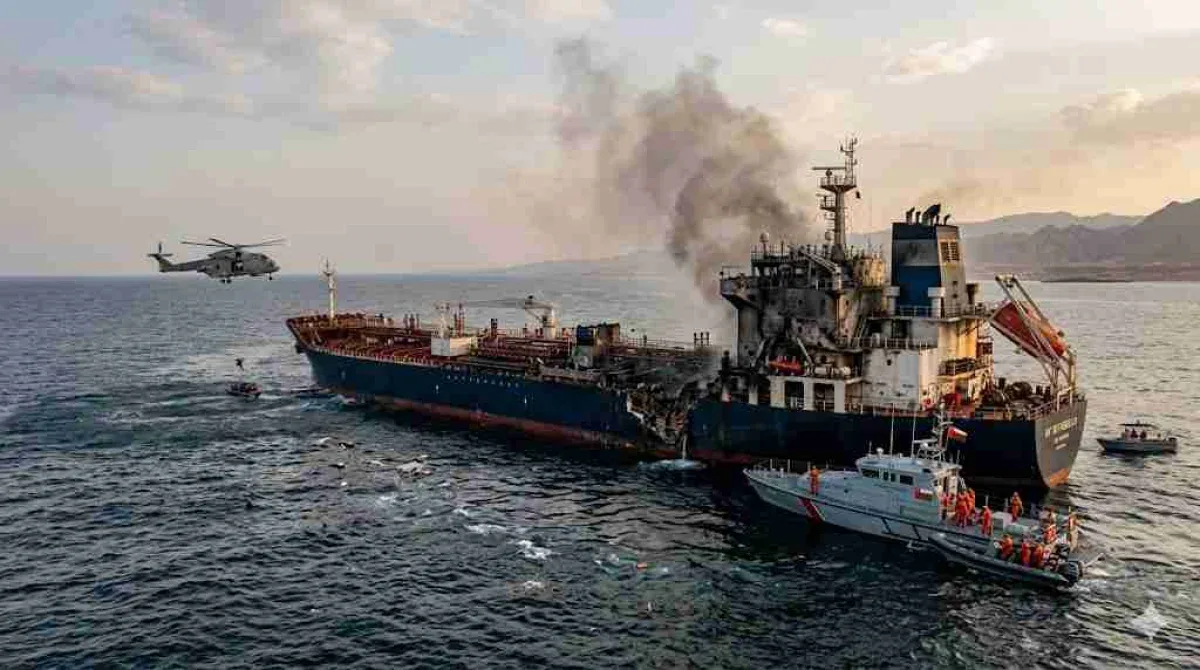
There is a particular kind of shock that settles in when an ally is the one responsible for the deaths. On June 10, 2026, the US military struck the Palau-flagged tanker MT Settebello in the Gulf of Oman. The ship was carrying 24 Indian crew members. Three of them are now confirmed dead.
External Affairs Minister S. Jaishankar called US Secretary of State Marco Rubio directly. India summoned the US Embassy's Charge d'Affaires in New Delhi. The message from India was unambiguous: "Such lethal actions against commercial shipping are not justified."
What Happened to MT Settebello and Its Indian Crew
The MT Settebello was a tanker carrying chemical and oil products, transiting the Gulf of Oman. US Central Command said an aircraft fired precision munitions into the ship's engine room after the crew repeatedly failed to comply with directions from American forces. The US accused the vessel of violating the naval blockade by attempting to transport Iranian oil.
The tanker had 24 Indian crew members on board, of whom 21 were rescued. India's Shipping Minister Sarbananda Sonowal confirmed the worst: three Indian seafarers initially reported missing were confirmed dead after their bodies were located and identified.
This was not an isolated incident. The attack on MT Settebello was reportedly the second event involving a vessel with Indian crew members within the same week, highlighting growing concerns about the safety of seafarers operating in one of the world's most strategically important maritime regions. The incidents drew attention not only because of the vessels involved but also because Indian nationals were among the crew members on multiple ships caught up in the escalating tensions.
Read More: Why Iran and Israel are at War: 2026 Conflict & Operation Epic Fury Explained
Earlier, the Palau-flagged tanker Marivex was struck in the Gulf of Oman after US forces alleged that the vessel had failed to comply with instructions. All 24 crew members were subsequently rescued by the Omani military. Shortly afterward, another vessel, the Guinea-Bissau-flagged Jalveer, became involved in a similar confrontation. According to US CENTCOM, two Hellfire missiles were fired into the ship's engine room after repeated warnings and directions were allegedly ignored by the crew.
Taken together, the incidents represented a remarkable sequence of maritime security events occurring within a matter of days. Three separate vessels, multiple military interventions, and Indian crew members present on each ship underscored the increasing risks faced by commercial seafarers navigating waters affected by regional tensions and military operations.
Why the US Navy Is Targeting Ships in the Gulf of Oman
To understand what happened, you need to know where this all began. The strikes come amid a broader conflict between the United States and Iran that began on February 28, 2026, following US and Israeli strikes that killed Iran's supreme leader. Washington imposed a blockade on April 13 after Iran closed the Strait of Hormuz.
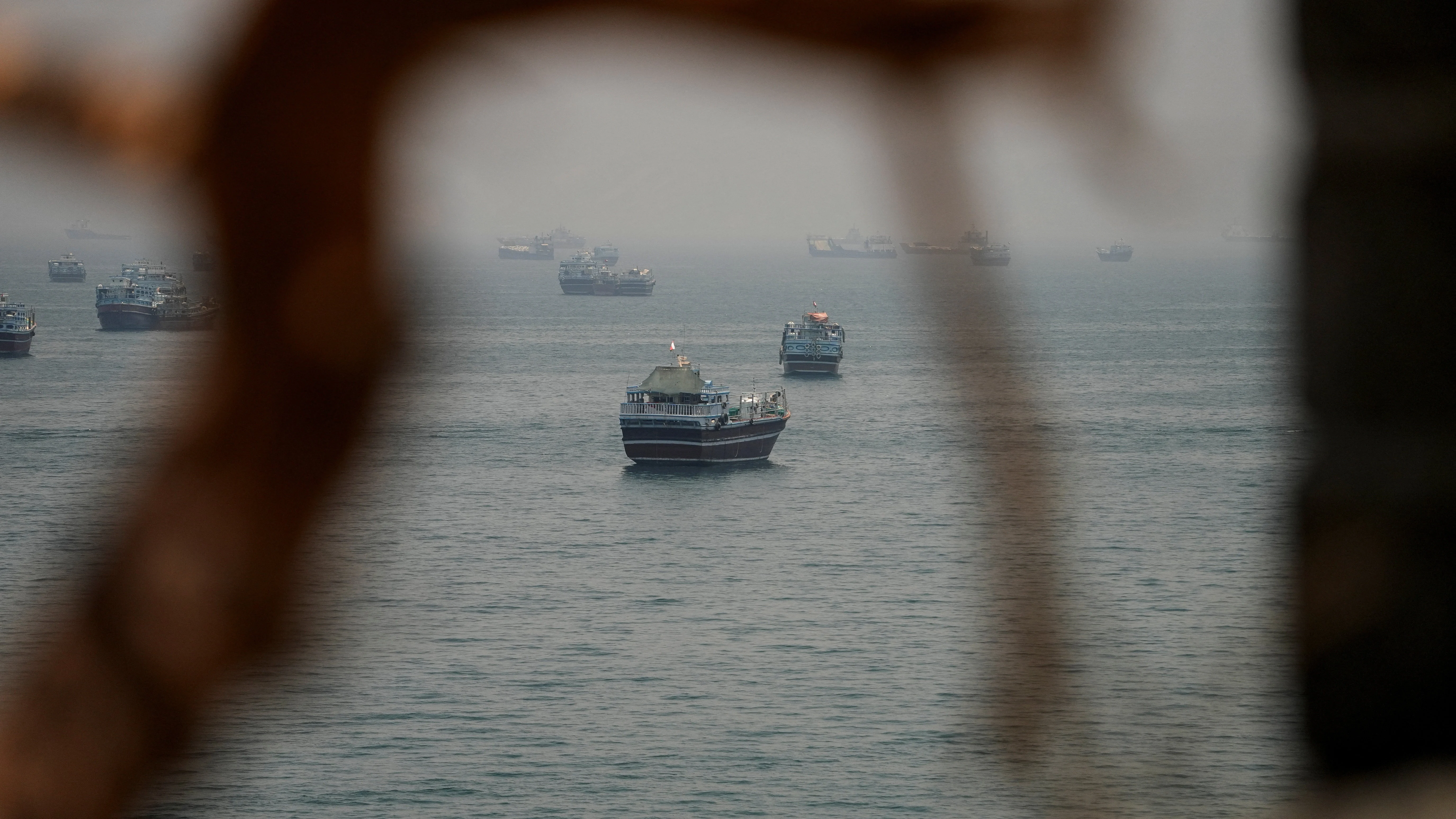
The Strait of Hormuz matters enormously to the global economy. Roughly one-fifth of global oil and gas supplies pass through it. When Iran shut it down, the US responded with a naval blockade of Iranian ports and began targeting vessels it accused of moving Iranian oil through the Gulf.
Ships being targeted include Iranian vessels as well as shadow fleet tankers, which are typically older vessels without Western insurance used to transport sanctioned oil, sailing under the flags of various nations to obscure their trading activity.
That is where Indian seafarers got caught. Many Indian mariners work on these older, non-Western tankers. They are not political actors. They are workers. And they ended up in the middle of a military enforcement operation with no warning system designed for them.
Read More: Ebola Is Back and Spreading Fast: Everything You Need to Know About the 2026 Outbreak
India's Diplomatic Response to the US Navy Attack on Indian Mariners
India officially summoned the Charge d'Affaires of the US Embassy in New Delhi to formally lodge its protest regarding these attacks. Jaishankar was direct in his public statement: India's strong protest had been reiterated. The phrasing "reiterated" suggests this was not the first conversation. India had been raising concerns before the confirmed deaths.
The incidents came at a time when Indian Prime Minister Narendra Modi was expected to hold bilateral talks with President Donald Trump on the sidelines of the G7 summit. The timing added an uncomfortable dimension to what were supposed to be routine diplomatic meetings between two strategic partners.
Jaishankar added during his communication with Rubio: "We Indians have never done anything to endanger Europe." That line is pointed. It signals India's frustration that Indian nationals are paying a lethal price in a conflict they have no part in.
What This Means for Indian Seafarers Working in the Gulf Region
India is one of the largest suppliers of maritime labour in the world. Hundreds of thousands of Indian seafarers crew vessels across global shipping routes, including the Gulf. The Indian government has maintained that commercial shipping should not be targeted, and the incident drew criticism from maritime labour representatives.
According to US officials, forces enforcing the blockade have disabled eight vessels and redirected 134 others since operations began. With that scale of enforcement activity, and given how many Indian crew members work on older tankers operating in that region, the risk to Indian mariners has become very real, very fast.
The broader question that this raises, one that India's foreign policy establishment will have to grapple with, is what protections exist for civilian maritime workers during active military blockade operations. Right now, the answer appears to be: not enough.
Read More: When Missiles Move Markets: Why Indian Stocks Fell as US-Iran Tensions Reignited
The Tension at the Heart of the India-US Relationship
India and the United States share a strong strategic partnership built on trade, defence, and technology cooperation. While a single incident is unlikely to alter that relationship, the deaths of Indian sailors have created a sensitive diplomatic challenge for both countries.
India has maintained a balanced position on regional tensions, but incidents involving Indian citizens naturally require a firm response. External Affairs Minister S. Jaishankar's remarks reflected that balance expressing concern and seeking accountability while preserving broader diplomatic ties.
Beyond the diplomacy, the human impact remains central. For the families of the three Indian sailors, the tragedy is deeply personal, overshadowing the wider geopolitical debate.
Disclaimer: This article is based on information available across the web. Parchar Manch does not take responsibility for its complete accuracy, as the content could not be fully verified.
FAQs
What happened to the MT Settebello?
The Palau-flagged tanker MT Settebello was struck by the US military on June 10, 2026, in the Gulf of Oman. US CENTCOM said the vessel was violating the Iran naval blockade. The ship had 24 Indian crew members; three were killed and 21 were rescued.
Why did India summon the US Embassy official?
India summoned the US Embassy's Charge d'Affaires in New Delhi to formally register its protest over US Navy attacks that killed three Indian mariners. EAM Jaishankar also called US Secretary of State Marco Rubio directly.
What is the US naval blockade of Iran?
The US imposed a naval blockade on Iranian ports from April 13, 2026, after Iran closed the Strait of Hormuz. Under this blockade, US forces are authorized to disable vessels they believe are transporting Iranian oil in violation of sanctions.
Were other Indian crew ships also targeted?
Yes. Within the same week, the Marivex and the Jalveer, both crewed largely by Indians, were also struck by US forces in the Gulf of Oman. The crew of the Marivex were rescued by Oman's military with no fatalities.
What is India's official position on the US-Iran conflict?
India has maintained a neutral stance on the US-Iran conflict and has not aligned with either side. However, India has consistently called for the protection of commercial shipping and civilian maritime workers in conflict zones.
Does this affect Indian sailors working in the Gulf region?
Yes. With hundreds of thousands of Indian mariners working globally, including on older non-Western tankers operating in the Gulf, the active US blockade enforcement has created significant safety risks for Indian seafarers.