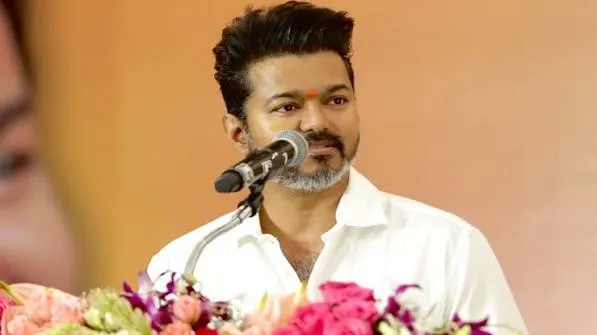
Vijay Thalapathy Is Now Tamil Nadu Chief Minister: The Story Behind India's Most Stunning Political Debut
Not many people could walk out of a film career spanning 69 lead roles and walk straight into the Chief Minister's chair of India's sixth-largest state by population. C. Joseph Vijay did exactly that.
On May 10, 2026, C. Joseph Vijay, the Tamil cinema superstar known to millions as "Thalapathy" or simply Vijay, was sworn in as Tamil Nadu Chief Minister at Chennai's Jawaharlal Nehru Indoor Stadium, becoming the ninth person to hold the office and the first in nearly six decades to have no connection to either the DMK or the AIADMK, the two Dravidian parties that had shared power in the state without interruption since 1967.
The oath was administered by Governor Rajendra Vishwanath Arlekar. Actor Trisha Krishnan sat in the crowd. Rahul Gandhi was among the dignitaries present. And a state that had never seen anything quite like this had to reckon with the fact that it was real.
How Vijay's Party TVK Broke 59 Years of Dravidian Dominance
Tamilaga Vettri Kazhagam, or TVK, was not even two years old when it contested the 2026 Tamil Nadu Assembly election. Vijay had officially formed the party in 2024, ending his film career and announcing the intention to contest all 234 seats without alliance partners. Most political observers expected a decent debut. Few expected what actually happened.
Voting across all 234 constituencies took place on April 23, 2026, with a record turnout of 85.1 percent, the highest in Tamil Nadu's electoral history. When results were declared on May 4, TVK had won 108 seats, emerging as the single largest party. The DMK, which had governed the state since 2021, secured only 59 seats. The AIADMK won 47.
Vijay himself won from two constituencies, Perambur in North Chennai by a margin of over 38,000 votes, and Tiruchirappalli East by 27,216 votes. Under Indian law, he later vacated one seat.
TVK captured approximately 35 percent of the popular vote on its first attempt. The party dominated urban centres including Salem, Coimbatore, Erode, Tiruchirappalli, and Madurai.
The Coalition Drama That Nearly Kept Vijay Out of Power
The 108 seats were not enough. Tamil Nadu's 234-member assembly requires 118 seats for a majority, and TVK was 10 short. What followed was described by American publication Variety as "a frantic few days of horse-trading."
On May 6, Vijay staked his claim to form the government by meeting the Governor. Arlekar, however, asked him to produce letters of support from 118 MLAs, and subsequently withdrew the convoy and security provided to Vijay as Chief Minister-designate, an unusual and contested move.
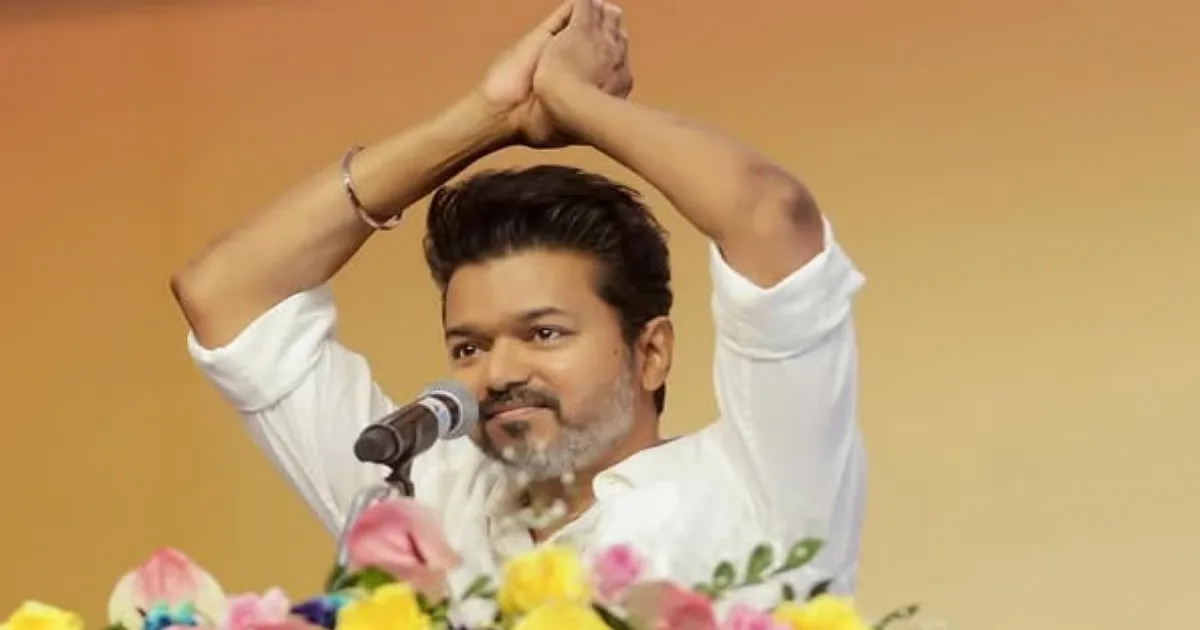
What unfolded over the next few days was coalition arithmetic at high speed. The Indian National Congress agreed to break from its DMK-led alliance and support TVK, conditional on TVK committing never to align with the BJP. The CPI, CPI(M), VCK, and IUML extended support without leaving the DMK-led SPA. By May 9, TVK had secured the backing of 120 MLAs.
Vijay was sworn in on May 10. The floor test was passed on May 13. And just over a week later, the Cabinet was expanded to 33 members, including four women ministers. Congress entered the Tamil Nadu Cabinet for the first time since 1967.
What Made This Victory Happen: Beyond the Film Star Theory
The easy explanation is that Vijay is famous. True. But Tamil Nadu has not rewarded fame alone. Rajinikanth, arguably the state's most iconic actor, stepped back from a similar political ambition. Kamal Haasan's Makkal Needhi Maiam made modest inroads before facing setbacks. Fame alone does not translate.
What TVK did differently was build a genuinely organized political machine inside a compressed timeline. The party ran a digital-first campaign across YouTube, Instagram, Facebook, and WhatsApp, which BBC described as reflecting a major shift toward digital political mobilization in India. Vijay had spent years embedding social justice themes into his films, creating a screen persona that felt politically legible before he ever announced a party.
His manifesto promised a drug-free state, job assurance for youth, collateral-free education and startup loans, and monthly financial assistance to students. It spoke to a voter base that had grown tired of the DMK-AIADMK duopoly and wanted something that felt like a clean break, not just another Dravidian realignment.
Read More: The Iran-US Peace Deal Is Almost Here — But Israel's War in Lebanon Could Still Unravel Everything
What the Vijay Government Looks Like Six Weeks In
The early weeks have not been without friction. An appointment of an astrologer as a political aide to the Chief Minister drew sharp criticism from alliance partners and was revoked within a day. A procurement controversy over a tender in Kanchipuram raised questions about process. A petition in the Madras High Court alleged Vijay was deliberately excluded from an FIR related to a fatal 2025 TVK rally stampede that killed 41 people.
These are early days. Vijay himself retained the portfolios of public administration, police, and home, signaling a desire for direct control over the most powerful levers of state governance.
By June 2026, five AIADMK MLAs had resigned their seats to join TVK, adding to the government's base. Six assembly seat by-elections are pending announcement.
Read More: Hanuman Jayanti 2026 Guide: Date, Puja Timings, Rituals & Importance
Closing Thoughts
Vijay Thalapathy's rise from Tamil cinema to the Tamil Nadu Chief Minister's office is one of the most compressed and consequential political trajectories in Indian democratic history. The precedent of MGR, Jayalalithaa, and Karunanidhi all loom over this moment. But those transitions took decades. What Vijay did in under three years, from forming a party to forming a government, is something the political science textbooks are still trying to categorize. Whether the TVK government translates electoral momentum into sustained governance is the test that will define whether this was a disruption or a lasting realignment.
Tamil Nadu has not made it easy for non-Dravidian politics in sixty years. The state has now made a different choice. What follows that choice matters as much as the choice itself.
FAQs
What is Tamilaga Vettri Kazhagam and when was it formed?
Tamilaga Vettri Kazhagam, or TVK, translates to "Victory Party of the Tamilakam." Vijay founded it in 2024 after retiring from his film career. The party contested its first election in the 2026 Tamil Nadu Assembly election, winning 108 seats and emerging as the single largest party in the state.
How did Vijay form a government without a majority?
TVK won 108 seats but needed 118 for a majority. Vijay built a coalition by bringing in the Indian National Congress, CPI, CPI(M), VCK, and IUML, securing the backing of 120 MLAs. Congress broke from its alliance with the DMK to join the TVK-led government, ending roughly six decades outside the Tamil Nadu cabinet.
What controversies has the Vijay government faced in its early weeks?
The government revoked an appointment of a party astrologer as a political aide after criticism from alliance partners. A procurement controversy involving a tender with a six-hour window drew DMK accusations of contractor favoritism. A petition in the Madras High Court also alleged Vijay was excluded from an FIR related to a fatal 2025 TVK rally stampede.
What did TVK promise in its 2026 election manifesto?
The TVK manifesto promised a drug-free Tamil Nadu, job assurance for youth, collateral-free education and startup loans, and monthly financial assistance to students. It positioned itself as a corruption-free alternative to decades of Dravidian party rule.
Did Vijay win from his own constituency?
Yes. Vijay won from two constituencies: Perambur in North Chennai by a margin of over 38,000 votes, and Tiruchirappalli East by 27,216 votes. He subsequently vacated one seat as required by law, triggering a by-election for that constituency.