India UK Trade Agreement Comes Into Effect: What Actually Changes for Prices, Jobs and Business Starting Now
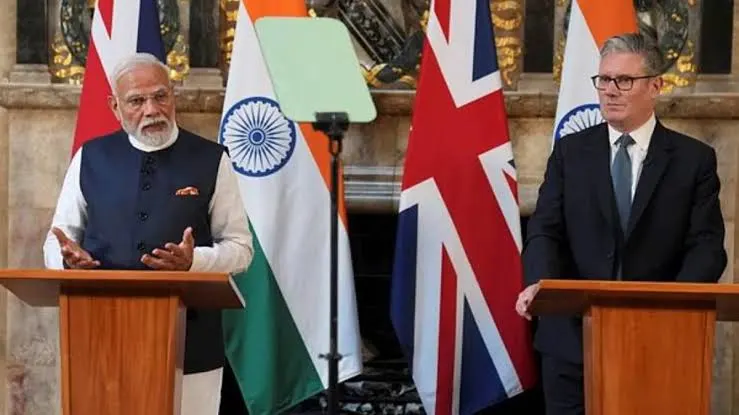
Scotch whisky just got cheaper in India. That's not the headline most trade stories lead with, but honestly, it might be the detail that makes people actually pay attention. The India UK trade agreement stopped being a policy document on July 15, 2026, and became something real, something that shows up on receipts and shipping invoices starting this week.
If you've seen the term CETA floating around in the news and skipped past it assuming it was too technical to bother with, stop. This one's worth understanding, even if you've never shipped a container of anything in your life.
Why This Actually Matters
Here's the honest answer: because prices move, and jobs move with them. The India UK Comprehensive Economic and Trade Agreement, its full formal name, cuts tariffs on thousands of goods traded between the two countries. Britain will scrap duties immediately on roughly 96.8 percent of its tariff lines, covering about 97.7 percent of trade value with India. India, for its part, is removing duties immediately on 64.1 percent of its tariff lines, with another 21 percent phased out over time.
That asymmetry, Britain moving faster than India, is one of the more debated parts of the deal. Critics in the UK Parliament have noted the full benefits for UK exporters will take years to arrive, even as Indian exporters get most of their access right away. It's not perfect. Few trade deals are. But it's the UK's most economically significant bilateral trade agreement since leaving the European Union, according to the House of Commons Business and Trade Committee, and that alone should tell you the scale we're talking about.
What the India UK Trade Agreement Really Is, Explained Simply
Think of it like two neighbors who've spent years arguing over a shared fence, finally agreeing to take most of it down. Before this deal, Indian tariffs on many UK goods sat between 4 percent and 20 percent. That's essentially a tax added onto the price before it even reaches a shop shelf. Remove or reduce that tax, and the product gets cheaper, or the company selling it makes a better margin, or both.
Negotiations for this India UK trade deal actually started back in January 2022. It took over three years to sign, in July 2025, and another year after that before entering into force this week. Slow, deliberate, occasionally stalled over disagreements like UK steel protections. But it got done.
How the Trade Deal Works, Step by Step
- Tariff cuts kick in immediately for most goods. UK exporters selling Scotch whisky, cars, and machinery to India see reduced duties right away on a large share of products, though some sensitive categories are phased in over several years.
- Indian exporters get near-total duty-free access. Around 99 percent of Indian exports to the UK now enter duty-free, immediately benefiting labour-intensive sectors like textiles, leather, footwear, marine products, and gems and jewellery.
- Professionals get easier mobility. Eligible Indian professionals and their employers are exempted from contributing to Britain's National Insurance for up to five years, a provision expected to benefit around 75,000 workers.
- Customs get faster. Both countries have committed to releasing goods within 48 hours where possible, prioritising perishable products, with digital and online customs processes replacing older paperwork-heavy systems.
- Businesses must register to actually use it. UK exporters need a one-time registration with HMRC through the Origin Registration portal before they can claim preferential tariff rates. Skip that step, and the discounted rates simply don't apply to your shipment.
Read More: Trump's "Mandatory" Demand: Why Saudi Arabia and Qatar Must Now Choose Between Iran and Israel
Real-World Examples: What Gets Cheaper, and For Whom
Scotch whisky and British cars are the consumer-facing headline in India, since Indian tariffs on these were historically steep. On the flip side, Indian textiles, leather goods, and jewellery are expected to become noticeably more competitive on UK shelves, since British duties on these categories, which ranged as high as 20 percent, are dropping immediately.
Bilateral trade between the two countries was worth roughly £48 billion in 2025. The UK government's own projections estimate the deal could boost bilateral trade by £25.5 billion a year in the long run, while lifting UK GDP by about £4.8 billion and India's by around £5.1 billion annually, once fully phased in.
Read More:Pope Leo XIV's "Magnifica Humanitas": The Church's Bold Stand Against AI Dehumanization
Mistakes People Keep Making About This Deal
A common misunderstanding is assuming a free trade agreement means every single product instantly gets cheaper everywhere. It doesn't work that way. Some sectors are excluded as sensitive, and India's tariff cuts specifically are staggered over years, not switched on overnight. If you're a small business owner expecting instant savings on every product line, check the specific tariff schedule for your goods rather than assuming blanket relief.
Another mistake: forgetting the registration step. The CETA agreement only benefits businesses that actually complete the paperwork, in the UK's case, that HMRC Origin Registration. Plenty of eligible companies could miss out simply by not registering in time.
Read More: Sensex Slides as US-Iran Tensions Shake Dalal Street: What Every Indian Investor Must Know Today
Pro Tips for Businesses Trying to Actually Use This Deal
If you're an exporter on either side, don't wait to check your specific tariff line, the savings vary wildly by product category, and guessing costs money. Also, pay attention to the phased timelines. A product that isn't duty-free today might become duty-free in year three or five, so long-term sourcing decisions should factor in where the tariff curve is heading, not just where it stands this week.
Closing Thoughts
Trade agreements are strange things. They're negotiated in conference rooms over years, signed with photographs and handshakes, and then quietly, almost anticlimactically, they just start working in the background of ordinary commerce. Somewhere this week, a shipment of textiles left an Indian port bound for Britain at a lower duty than it would have carried a month ago. Nobody threw a parade for it. But it happened.
Disclaimer: This article is based on information available across the web. Parchar Manch does not take responsibility for its complete accuracy, as the content could not be fully verified.
FAQs
When did the India UK trade agreement come into effect?
The agreement entered into force on July 15, 2026, after being signed in July 2025 and debated in the UK Parliament earlier this year.
What is CETA in the context of this deal?
CETA stands for the Comprehensive Economic and Trade Agreement, the formal name for the India UK trade agreement covering goods, services, and professional mobility.
Will prices in India actually drop because of this deal?
For products like Scotch whisky and British cars, yes, tariff reductions are expected to lower prices, though the scale depends on how much of the saving retailers pass on to consumers.
Which sectors benefit most from the India UK trade deal?
Indian textiles, leather, footwear, marine products, and gems and jewellery gain immediate duty-free access to the UK, while British sectors like automobiles, financial services, and Scotch whisky gain improved access to India.
Is this the UK's biggest trade deal since Brexit?
According to the UK's own Business and Trade Committee, it is described as the UK's most economically significant bilateral free trade agreement since leaving the European Union.