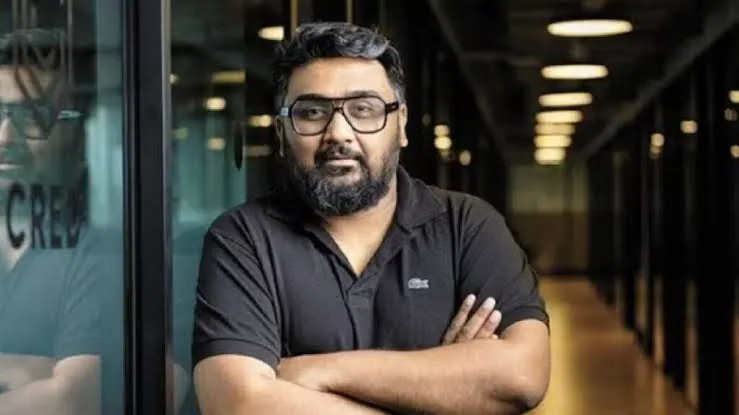
The Indian Entrepreneur Who Just Took Over WhatsApp: What the Kunal Shah Appointment Tells Us About Meta's Biggest Bet
Nobody expected this. Not in this form, at least.
On June 22, 2026, Meta announced that Kunal Shah, the founder of Indian fintech company CRED, would become the new global head of WhatsApp, succeeding Will Cathcart who had led the messaging service for nearly seven years. Alongside the appointment, Meta committed $900 million to CRED as part of a funding round, acquiring a roughly 20 percent minority stake and valuing the company at $4.5 billion.
Two announcements. One deal. And a signal that is hard to miss.
Why Kunal Shah as WhatsApp CEO Is a Bigger Story Than It Looks
WhatsApp has over three billion users globally. India alone accounts for more than 500 million of them, making it the app's single largest market. That context matters when you realize Meta did not just hire a new executive. It hired the person who built one of India's most prominent fintech platforms and placed him at the head of the world's most-used messaging app.
Mark Zuckerberg said Shah brought a "builder mentality and global perspective" needed to run the platform. That phrasing sounds polished, but it points at something real: WhatsApp's next chapter is not about adding users. It is about monetizing them, through payments, business messaging, and AI-driven services. Shah has done exactly that kind of work before.
Read More: Tata Sons Board Meeting: The Crisis Inside India's Most Powerful Conglomerate
Who Kunal Shah Really Is
Shah grew up in Mumbai, studied philosophy at Wilson College, and briefly enrolled in an MBA program before dropping out to build companies. That combination, philosophy and entrepreneurship, explains something about how he thinks. He talks about money and consumer behavior in ways that feel more like frameworks than pitches.
He co-founded FreeCharge in 2010, one of India's early digital payments startups. Snapdeal acquired it in 2015 for roughly $400-450 million. By 2018, he had launched CRED, a members-only platform that rewards users for paying credit card bills on time.
CRED is deliberately selective. It requires a minimum credit score to join, which means its 17 million monthly active users are primarily India's creditworthy, higher-income population. The platform currently processes over 40 percent of India's credit card bill payments. Alongside building CRED, Shah made more than 200 angel investments in startups including Razorpay and BharatPe, becoming one of India's most active early-stage backers.
He is stepping down from CRED's day-to-day operations, though he retains his personal shareholding. Miten Sampat, who has overseen strategy and finance at CRED since 2020, steps in as interim CEO.
What the $900 Million Meta Investment in CRED Actually Means
The numbers here deserve a moment of attention. Meta's $900 million round for CRED is structured as a mix of primary and secondary share purchases. That means some money goes directly into CRED's balance sheet for growth, while some buys out existing shareholders. Meta joins the cap table as a minority investor but, critically, will not receive access to CRED's customer data under the deal terms.

CRED's post-money valuation lands at $4.5 billion, up from a pre-money figure of roughly $4 billion. The company has been heading toward an eventual IPO, and this round positions it ahead of that timeline with expanded resources across its payments, lending, insurance, and wealth businesses.
Shah himself said the gap between what WhatsApp is today and what it can ultimately become is enormous. That is not marketing language from someone new to the product. It reads like a founder who has spent a long time thinking about digital financial infrastructure and sees a platform that has not yet used its full weight.
Read More: Sensex Slides as US-Iran Tensions Shake Dalal Street: What Every Indian Investor Must Know Today
What WhatsApp Looks Like Under New Leadership
Will Cathcart, the outgoing head, said WhatsApp is in the strongest position it has ever been and called this an optimal moment for a leadership change. Under his final stretch, WhatsApp expanded to iPad and integrated Meta AI into the platform.
Shah takes over with a mandate that appears to center on revenue. WhatsApp's business messaging tools, subscription services, commerce integrations, and payments infrastructure are the natural growth levers. India is both the testbed and the largest opportunity for all of them.
The appointment of an Indian entrepreneur to lead a platform where India dominates user numbers is not incidental. It reflects where Meta believes WhatsApp's future value is built.
Read More: Power Shifts 2026: A Clear Look at India’s Changing Political Scene
Closing Thoughts
What happened here is quietly significant. A philosopher-turned-entrepreneur who built a credit card rewards app in Bengaluru now leads the world's biggest messaging platform. The connection is not random. CRED and WhatsApp are both bets on the same thesis: that trust, financial behavior, and daily communication can be woven together in ways that create lasting value.
Whether Shah can translate that thesis into WhatsApp's global scale is a question only time will answer. But the bet Meta is making, with $900 million in one hand and a leadership appointment in the other, suggests they are quite serious about finding out.
Read More: Trump's Iran Deal: The "Final Determination" That Nobody Has Made Yet
Disclaimer: This article is based on information available across the web. Parchar Manch does not take responsibility for its complete accuracy, as the content could not be fully verified.
FAQs
Who is Kunal Shah and why was he chosen to lead WhatsApp?
Kunal Shah is the founder of Indian fintech company CRED and co-founder of FreeCharge. He was appointed as WhatsApp's global head by Meta due to his experience building large-scale financial and consumer technology platforms, particularly in India, which is WhatsApp's largest market with over 500 million users.
What is Meta's investment in CRED about?
Meta invested $900 million in CRED as part of a Series H funding round, acquiring an approximately 20 percent minority stake. This values CRED at $4.5 billion. Meta will not receive access to CRED's customer data under the deal terms.
What happens to CRED now that Kunal Shah is leaving?
Miten Sampat, who has led strategy and finance at CRED since 2020, becomes interim CEO. Shah retains his personal shareholding in the company. CRED's board is working on a longer-term leadership structure as the company prepares for a potential IPO.
Who did Kunal Shah replace at WhatsApp?
He succeeds Will Cathcart, who led WhatsApp for nearly seven years and is moving to a new product-building role within Meta focused on artificial intelligence initiatives.
What is WhatsApp expected to focus on under Shah's leadership?
The primary focus areas are revenue growth through business messaging, digital payments, AI-powered services, and commerce integrations. India remains central to these ambitions given its massive user base on the platform.
Does this appointment affect regular WhatsApp users?
Not immediately. The change is at the leadership level. However, the strategic direction Shah brings may accelerate features around payments, business tools, and subscription services over the coming years.