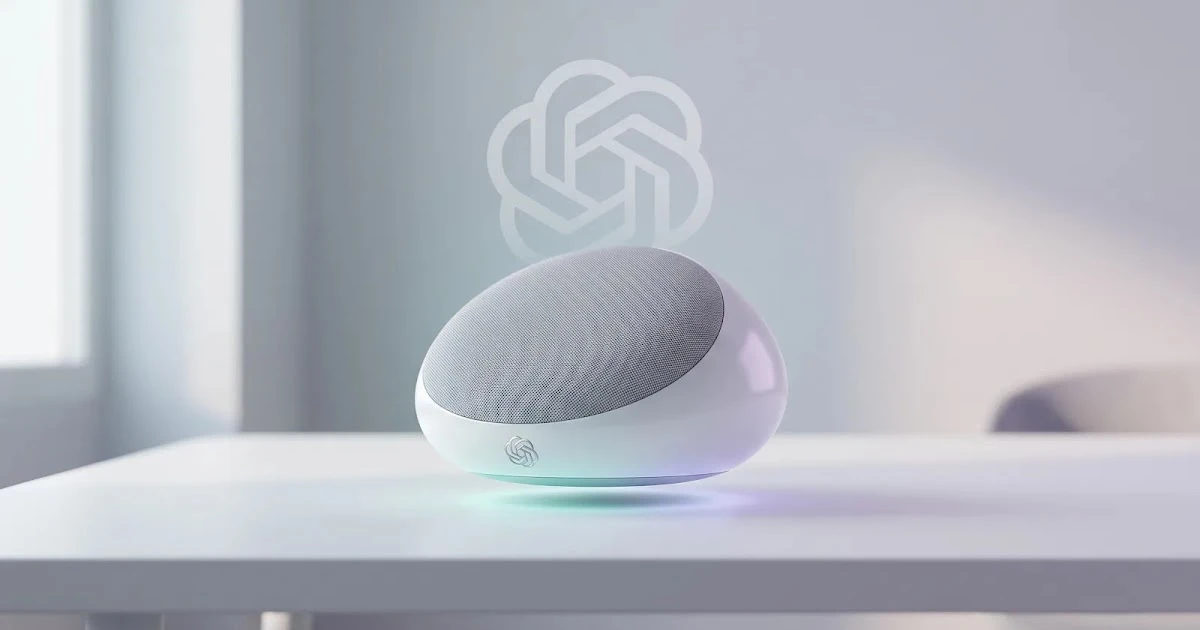
OpenAI's First Hardware Product Is Reportedly a Screenless Speaker That Moves on Its Own
Picture a speaker that doesn't just sit there waiting for a wake word. It has a camera. It has sensors. It has a rechargeable battery so you can carry it from the kitchen to the laundry room. And, oddly enough, it has mechanical parts that move on their own, not because you told it to, but because OpenAI wants it to feel alive. That's the OpenAI screenless speaker now surfacing in multiple reports, and honestly, it's stranger and more ambitious than most people expected.
If your mental image of a smart speaker is still a cylinder that plays music and sets timers, you'll want to recalibrate. This isn't that.
Why This Actually Matters
Here's the honest stakes. OpenAI has talked about entering hardware for years, ever since it announced its partnership with Jony Ive's io Products back in May 2025. That chatter mostly faded into background noise, one of those things everyone assumed would eventually happen but nobody could pin down. Then Apple sued OpenAI last week, alleging trade secret theft tied to its hardware development, and suddenly the whole project snapped back into public focus.
For anyone watching the AI industry, this matters because it signals something bigger than one gadget. OpenAI is reportedly heading toward an IPO, and a tangible consumer hardware story is exactly the kind of thing investors like to picture. It also puts the company on a collision course with Apple, Amazon, and Google, all fighting over the same shelf space in your home.
Read More: BAT-BMS App E-Rickshaws Scandal: How a Chinese Battery Tool Became India's Weirdest Road Hazard
What This Screenless Speaker Really Is, Explained Simply
Here's the plain version. Bloomberg's Mark Gurman reported that OpenAI's first hardware device is a portable, screen-free smart speaker, internally described as "a new type of home computer for the AI era." Not a phone. Not a wearable. A speaker, but one built with an entirely different ambition than what Amazon's Echo or Apple's HomePod represent.
Think of the difference this way. A traditional smart speaker is like a helpful clerk who only speaks when spoken to, answers your question, then goes quiet again. What OpenAI is reportedly building is closer to a housemate, something that proactively notices what's happening around it, remembers context about your life, and offers information before you even ask. That's the conceptual leap here, from reactive tool to what OpenAI is internally framing as a genuine AI companion.
Read More: Mountain Lions in California Preserve: How One Predator Quietly Rewired an Entire Ecosystem
How This Device Reportedly Works, Step by Step
- It runs on advanced voice technology. The speaker is expected to use GPT-Live, an expanded version of ChatGPT's Voice Mode that can listen and speak simultaneously, adapting naturally through pauses rather than waiting for a clean start and stop.
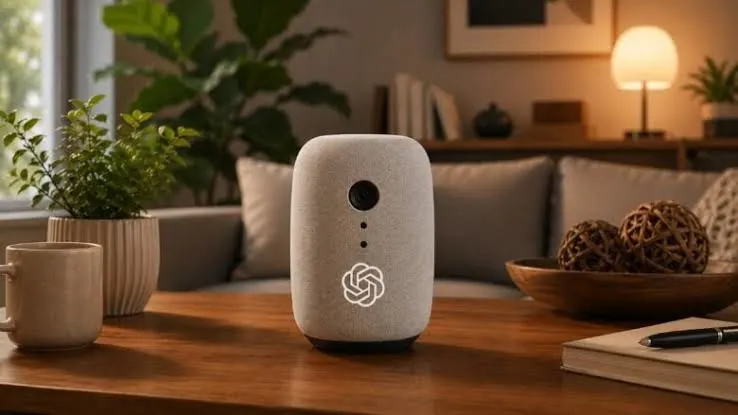
- It senses its environment. The device includes a camera and other sensors, allowing it to understand a user's surroundings and context, not just respond to spoken commands in isolation.
- It moves with you. A built-in rechargeable battery lets you physically carry the speaker between rooms, from the kitchen while cooking to the living room afterward, while also allowing it to stay plugged in permanently if you prefer.
- It has mechanical movement. Reports describe motorized parts that move on their own, a deliberate design choice meant to create the impression the device is alive rather than a passive object simply taking orders.
- It learns over time. The device is meant to become increasingly personalized and proactive, drawing on personal data such as emails to build a deeper understanding of its owner and anticipate needs before they're stated.
- It's part of a bigger hardware push. This speaker is reportedly just one of roughly five products OpenAI's hardware division is developing, alongside a pendant wearable, home robotics exploration, and longer-term plans for a mobile AI device intended to eventually replace the smartphone.
Real-World Example: The Apple Connection Behind This Project
This device didn't come out of nowhere. OpenAI spent $6.5 billion last year acquiring io Products, the hardware startup co-founded by Jony Ive, Apple's former chief design officer, alongside former Apple executives Scott Cannon, Evans Hankey, and Tang Tan, who now serves as OpenAI's chief hardware officer. Ive's design studio, LoveFrom, is reportedly handling design and creative direction across OpenAI's hardware lineup.
That deep Apple lineage is precisely what triggered the lawsuit. Apple filed suit against OpenAI last week, alleging the company stole trade secrets during its hardware development process, and has reportedly hired away more than 400 Apple employees in the process. OpenAI has publicly denied wrongdoing, stating it believes in fair competition and hasn't seen evidence the complaint has merit.
Mistakes People Keep Making About This Announcement
A common mistake is assuming this speaker is confirmed and imminent. It isn't quite that simple. This is currently based on reporting from sources familiar with OpenAI's plans, not an official company announcement, and OpenAI is reportedly aiming to unveil the device later this year with an actual release pushed to 2027, a timeline that Apple's lawsuit and requested injunction could still complicate.
Another mistake is assuming this is simply a HomePod competitor. According to people familiar with the plans, OpenAI doesn't consider Apple's existing HomePod and HomePod mini comparable to what it's building, arguing the audio system and broader hardware differ substantially. Treating this as a like-for-like alternative undersells how differently OpenAI is reportedly approaching the entire category.
Read More: Japanese Yen Falls to Weakest Level Against Dollar Since 1986, Here's What That Actually Means
Pro Tips for Following This Story as It Develops
If you want to track where this heads, watch the Apple lawsuit closely, since Apple is reportedly seeking an injunction that could directly delay OpenAI's hardware timeline regardless of how the underlying trade secrets claim eventually resolves. Also keep an eye on competing entrants in this same space, since Meta is developing its own AI pendant and Apple itself is reportedly preparing a smart-home command center, meaning this "AI companion" category is about to get crowded fast, well before any of these products actually ship.
Closing Thoughts
There's something genuinely strange about a company racing to build a device explicitly designed to feel alive, mechanical parts twitching to suggest personality, cameras quietly watching a room, all while locked in a lawsuit over whether its design team borrowed too much from the very company it's trying to compete against. Whether consumers actually want a speaker with that much personality, or whether this becomes another entry in the graveyard of ambitious AI gadgets that came before it, is a question only the market will eventually answer.
Disclaimer: This article is based on information available across the web. Parchar Manch does not take responsibility for its complete accuracy, as the content could not be fully verified.
FAQs
What is OpenAI's first hardware product?
According to Bloomberg, it's a portable, screenless smart speaker designed to act as a humanlike AI companion in the home, controlling smart devices, playing media, and tapping into ChatGPT's full capabilities.
When will the OpenAI speaker be released?
The company is reportedly aiming to unveil the device later this year, with an actual consumer release targeted for 2027, though ongoing legal issues with Apple could affect that timeline.
How is this different from existing smart speakers like Amazon Echo or Apple HomePod?
It reportedly includes a camera, environmental sensors, a rechargeable battery for portability, and mechanical parts that move independently to create a sense of personality, features not found in conventional smart speakers.
Why is Apple suing OpenAI over this device?
Apple alleges OpenAI stole trade secrets during hardware development, partly through hiring more than 400 former Apple employees, including executives who worked on the iPhone and Mac. OpenAI has denied the allegations.
Who is designing OpenAI's hardware products?
Jony Ive's studio LoveFrom is handling design and creative direction, following OpenAI's $6.5 billion acquisition of io Products, the hardware startup Ive co-founded with several other former Apple executives.
Is the screenless speaker OpenAI's only hardware project?
No. It's reportedly one of roughly five products in development, alongside a pendant wearable, home robotics exploration, and a longer-term mobile AI device intended to eventually replace the smartphone.