
Xbox CEO Asha Sharma: The AI Executive Now Rebuilding One of Gaming's Biggest Brands
Less than three months into the job, and she'd already cut 20 percent of her workforce. That's the kind of opening chapter most executives spend years trying to avoid, not walk straight into. Xbox CEO Asha Sharma took over Microsoft Gaming in February 2026, replacing longtime chief Phil Spencer, and by July she was standing in front of employees explaining why roughly 3,200 people, including 1,600 let go that same day, no longer had a place in the company she'd just started leading.
Here's what makes this genuinely striking, no, let me actually back up and explain who she is first, because the path here is unusual. Sharma didn't come up through gaming. She spent the two years before this promotion as an AI executive at Microsoft, most recently as President of the company's CoreAI product. Before Microsoft, she led product at Instacart for seven and a half years. Before that, home services startup Porch. A business degree from the University of Minnesota's Carlson School, graduated 2011. None of it screams gaming industry veteran, and that's precisely part of why her appointment raised eyebrows when it happened.
Why Asha Sharma's Leadership at Xbox Actually Matters
If you're an Xbox player, or honestly even just someone who follows how big tech companies restructure struggling divisions, this matters more than typical corporate leadership news. Xbox only accounts for about 6 percent of Microsoft's total revenue, yet it remains one of the company's most recognizable consumer brands, one of the faces people actually associate with Microsoft outside of enterprise software. Microsoft's latest financial report showed a 7 percent drop in quarterly gaming revenue, driven by a striking 33 percent decline in Xbox hardware revenue specifically. Despite pouring more than 20 billion dollars into content and hardware over five years, excluding the Activision Blizzard acquisition, annual revenue has actually fallen by nearly half a billion dollars. That's the mess Asha Sharma inherited, and how she handles it will likely shape what Xbox even looks like going forward.
What's Actually Happening at Xbox Right Now, Explained Simply
Think of it like a company that tried to expand into every possible direction at once, mobile gaming, cloud streaming, an ever expanding console lineup, and ended up stretched thin across all of it rather than strong in any one place. That's essentially Sharma's own diagnosis. She told Fortune plainly that Xbox made a bunch of bets to grow, and in doing so, didn't focus on the core business. Her predecessor, Sarah Bond, had pursued what was called an "Xbox everywhere" strategy pushing the brand well beyond consoles. Sharma is now redirecting resources back toward that core console business, which still represents about 80 percent of Xbox's overall business despite the expansion efforts elsewhere.
How Asha Sharma Has Restructured Xbox, Step by Step
- She succeeded Phil Spencer as CEO of Microsoft Gaming, later renamed simply Xbox, on February 20, 2026.
- Within months, she lowered Game Pass prices and cut the AI Gaming Copilot feature from consoles.
- She scrapped older marketing campaigns and revived previously shelved exclusive titles, including Gears of War: E-Day.
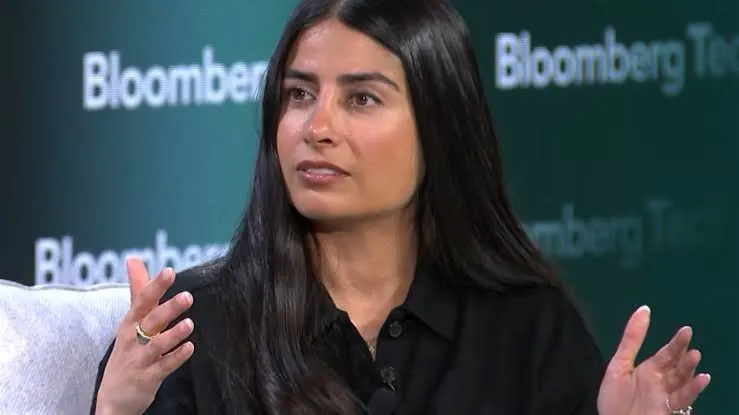
- In July, she announced layoffs affecting roughly 3,200 employees, about 20 percent of staff, with 1,600 let go the same day the announcement went out.
- Four studios departed for new management as part of the same restructuring.
- She told staff Xbox's operating margins currently run three to ten times lower than comparable businesses, describing it as one of Microsoft's worst performing divisions.
- Days after the layoffs, she was named to a Federal Reserve taskforce advising on the economic impact of AI on jobs and productivity.
That last point genuinely surprised a lot of people, an executive who just laid off thousands of employees turning around days later to advise a national institution on AI's impact on jobs broadly. The optics alone generated real conversation.
Read More: A Judge Just Killed Trump's $100,000 H-1B Visa Fee , Here Is What That Actually Means
Real World Context: The Numbers Behind the Restructuring
Sharma has been candid, at least publicly, about the pressures facing Xbox hardware specifically. She's pointed to surging component costs as a genuine structural problem, one that isn't going away on its own. According to her comments, a healthier Xbox could absorb that kind of hardware cost shock more easily, but an unhealthy one accelerates the need for painful changes. She's also floated the idea of "buy now, pay later" financing options to lower the barrier to entry for console purchases, alongside a broader openness to business models that don't assume the most premium, highest performing console is automatically the right product for every customer.
Mistakes People Keep Making When Reading This Story
It's tempting to read the layoffs and the Federal Reserve appointment as contradictory, or even hypocritical, happening within days of each other. That's an understandable reaction, but it conflates two genuinely separate things, a company specific restructuring decision, and a broader policy advisory role examining AI's economy wide effects on jobs. They're related in subject matter, sure, but treating them as the same decision oversimplifies what's actually a more complicated situation involving different stakeholders and different scopes of responsibility.
Read More: Modi at 12: A Decade-Plus of Leading India , What Changed, What Didn't, and What It All Means
Pro Tips for Following the Xbox Turnaround Story
Watch Xbox's operating margin figures in upcoming earnings reports rather than just headline revenue numbers, since Sharma herself has flagged margins as the real underlying problem, not just top line sales. Pay attention to whether the promised focus on console fundamentals, PC availability, and self-reliant engineering actually translates into shipped products, rather than just strategic language in interviews. And if you're a Game Pass subscriber or considering new hardware, keep an eye on pricing experiments like buy now pay later financing, since Sharma has explicitly signaled more changes to purchasing models are coming.
Closing Thoughts
There's something almost fitting about an AI executive being handed one of gaming's most storied, currently struggling brands, someone brought in specifically because she wasn't steeped in the old assumptions of how console gaming should work. Whether that outsider's perspective becomes Xbox's genuine turnaround story or simply a difficult, messy transition period remains an open question. Sharma herself seems to know this isn't finished, she's said as much directly, the core has to become healthy first, and even that alone won't be enough.
Read More: Oman in the Crossfire: Why the World's Most Neutral Nation Is Now Under Enormous Pressure
Disclaimer: This article is based on information available across the web. Parchar Manch does not take responsibility for its complete accuracy, as the content could not be fully verified.
FAQs
Who is Asha Sharma?
She's the current CEO of Xbox, appointed in February 2026, previously serving as President of Microsoft's CoreAI product and before that as a senior executive at Instacart.
Why did Xbox lay off thousands of employees under her leadership?
Sharma cited Xbox's low operating margins, a strategy that spread resources too thin across too many bets, and rising hardware component costs as key reasons behind the restructuring.
What is Asha Sharma's role with the Federal Reserve?
She was named to a taskforce advising the Federal Reserve on the economic impact of AI on jobs and productivity, shortly after announcing Xbox layoffs.
What changes has she made to Xbox's strategy so far?
She's lowered Game Pass prices, cut the AI Gaming Copilot feature, revived shelved exclusive titles, and redirected focus back toward Xbox's core console business.
Who succeeded Asha Sharma's own promotion at Xbox?
She succeeded Phil Spencer, who led Xbox for over a decade before stepping back, with Matt Booty promoted to Chief Content Officer under her leadership.
Is Xbox planning new pricing models for consoles?
Yes, Sharma has mentioned exploring options like buy now, pay later financing to lower the barrier to entry for console purchases.